
France has more than 30,000 villages, and the most beautiful ones are rarely where the crowds are. The cities get the headlines, but the villages are where France still looks the way you imagined it: ochre houses stacked up a Provençal hillside, half-timbered streets in Alsace that have not changed since the 1500s, a Dordogne hamlet carved into a cliff above the river.
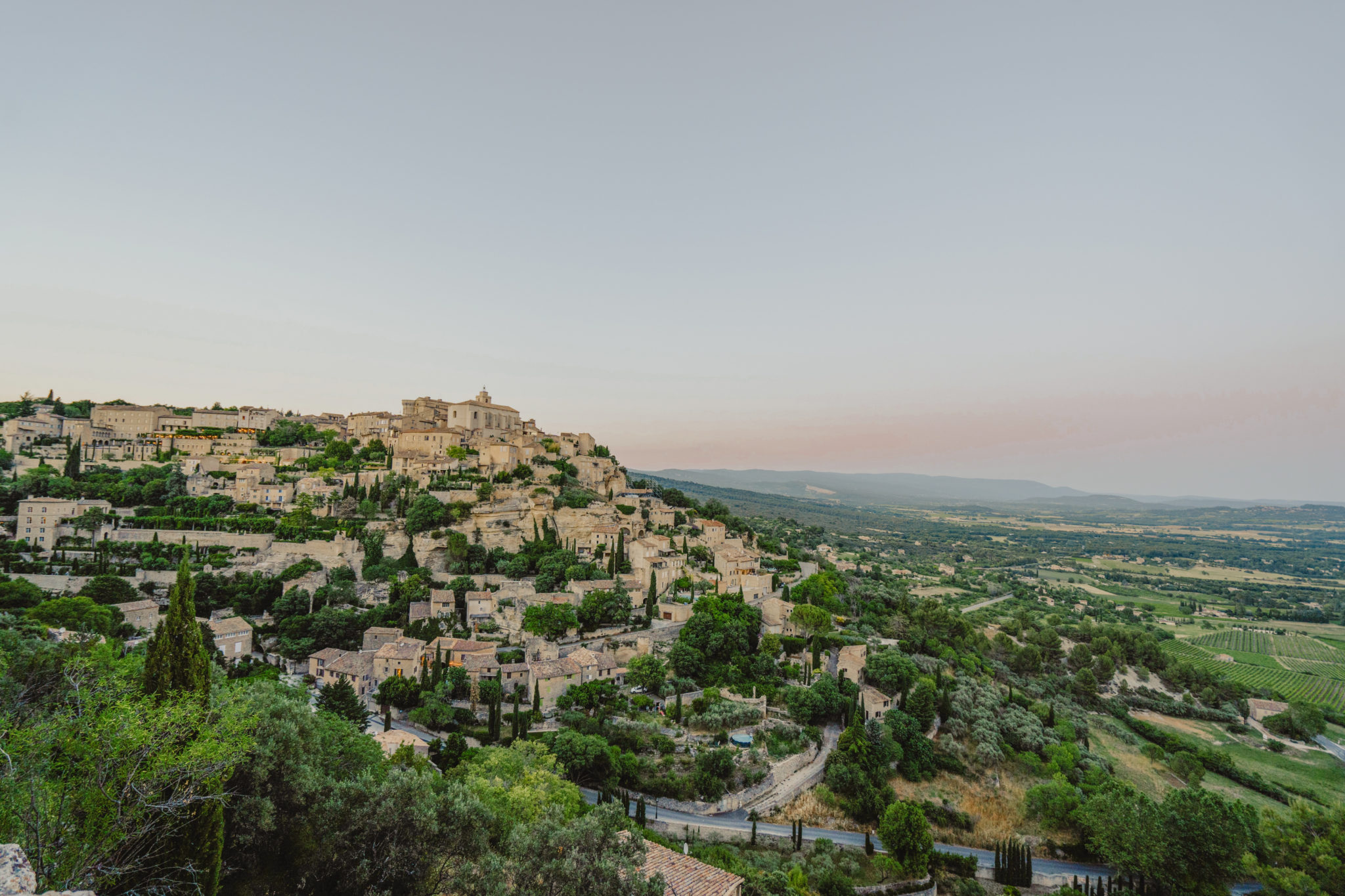
This list ranks the 25 most beautiful villages in France, grouped by region so you can string several together on one trip. Most are members of Les Plus Beaux Villages de France, the official association of the country’s prettiest villages, and the rest are here because they should be. For each one you will find why it is worth the detour, the one thing not to miss, where to stay and how to reach it without a headache.
If you are still planning the bigger picture, start with the 20 incredible places to visit in France, then come back here to fill in the villages between them.
Quick picks: the most beautiful villages in France for your kind of trip
Short on time? These are the villages to choose by what you want from the trip. Each links down to its full entry.
| Best for | Village | Region |
|---|---|---|
| The classic postcard | Gordes | Provence |
| A honeymoon | Èze | French Riviera |
| Christmas markets and wine | Riquewihr | Alsace |
| Foodies | Espelette | Basque Country |
| History buffs | Mont-Saint-Michel | Normandy |
| Art lovers | Giverny | Normandy |
| Castles and river views | La Roque-Gageac | Dordogne |
| Hiking and lakes | Yvoire | Lake Geneva |
| Fewest tourists | Baume-les-Messieurs | Jura |
| A day trip from Paris | Giverny or Montrésor | Normandy / Loire |
How the regions fit together. Provence and the Riviera (villages 1 to 7) work as one week-long loop from Marseille or Nice. Alsace (8 to 10) is a two-day drive along the Route des Vins from Strasbourg. Burgundy, the Loire and the Dordogne (11 to 14) sit in a line south-west of Paris. Normandy, Brittany, the Basque Country and the Alps (15 to 20) are each a separate trip. The south-west, Corsica and the Jura (21 to 25) are for a second or third visit, and are where you will find the fewest tourists.
The most beautiful villages in France: Provence and the French Riviera
The Luberon hills east of Avignon hold the densest cluster of beautiful villages in France, and the Riviera adds two of the most dramatic. Base yourself in Gordes or Lourmarin for the Luberon and in Nice for the coast; everything below is within 90 minutes of one or the other.
1. Gordes, Provence
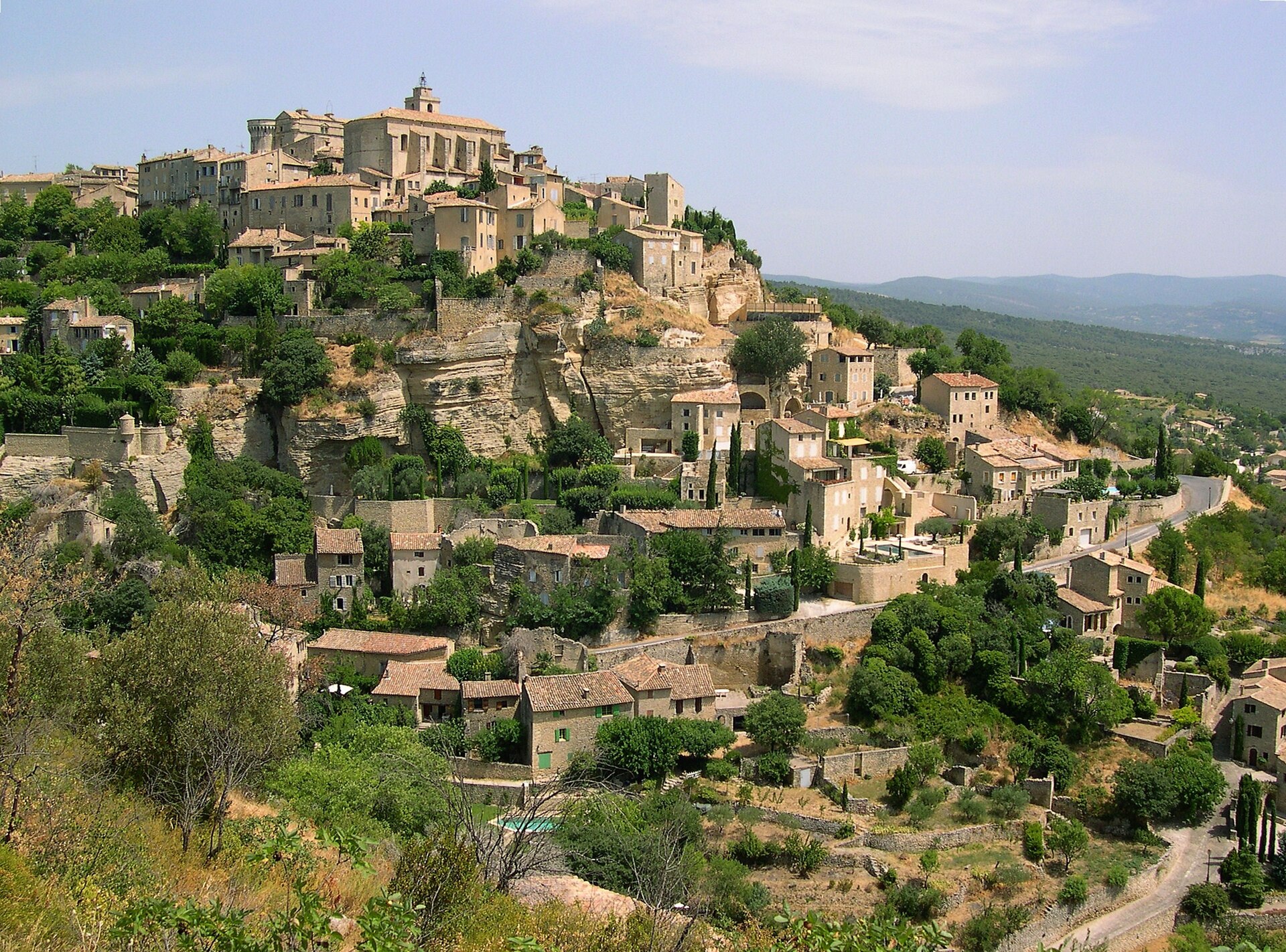
Gordes is the village everyone pictures when they think of Provence: pale stone houses climbing a rocky spur above the Luberon valley, a 16th-century château at the top and lavender fields at the bottom. It is the most photographed village in the region and, for once, the photographs undersell it.
Do not miss: the view from the roadside lookout on the D15 as you arrive from Cavaillon, and the Sénanque Abbey, 4 km away, where the lavender blooms from late June to mid July. Come at 8am for both; by 10am the car park is full.
Stay: La Bastide de Gordes, a palace hotel carved into the village walls with a spa and views over the whole valley. For something smaller, Les Bories & Spa just outside the village.
Getting there: 45 minutes by car from Avignon TGV station. There is no useful public transport, so hire a car.
2. Roussillon, Provence
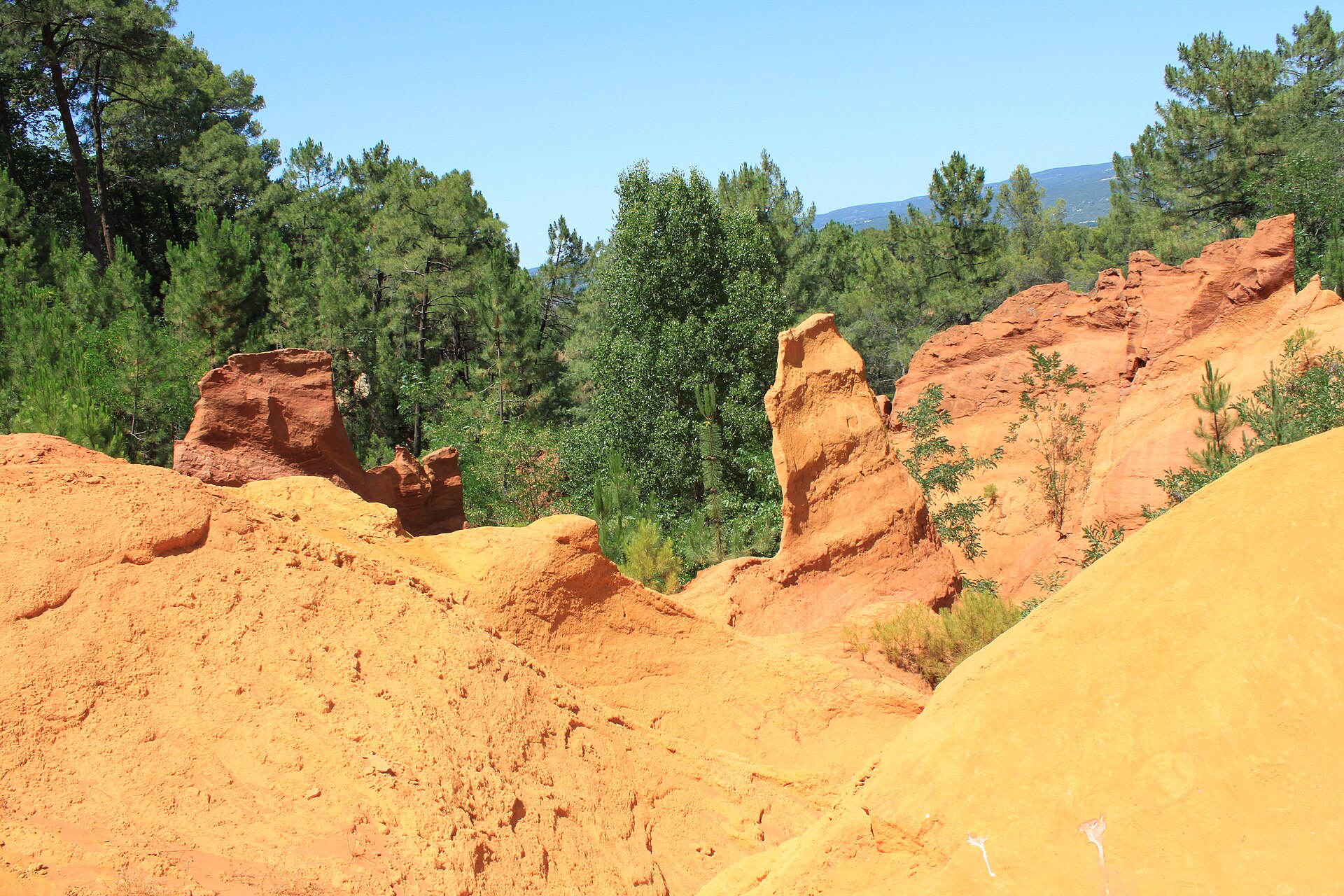
Ten minutes from Gordes, Roussillon is painted in every shade of ochre from pale yellow to blood red, because the village sits on one of the largest ochre deposits in the world. The houses, shutters and even the church are coloured with the earth they stand on.
Do not miss: the Sentier des Ocres, a 30- or 60-minute walk through the former ochre quarries. Wear shoes you do not love.
Stay: Le Clos de la Glycine, in the heart of the village with a terrace restaurant looking straight onto the cliffs.
Getting there: 10 minutes by car from Gordes, 50 minutes from Avignon.
3. Ménerbes, Provence
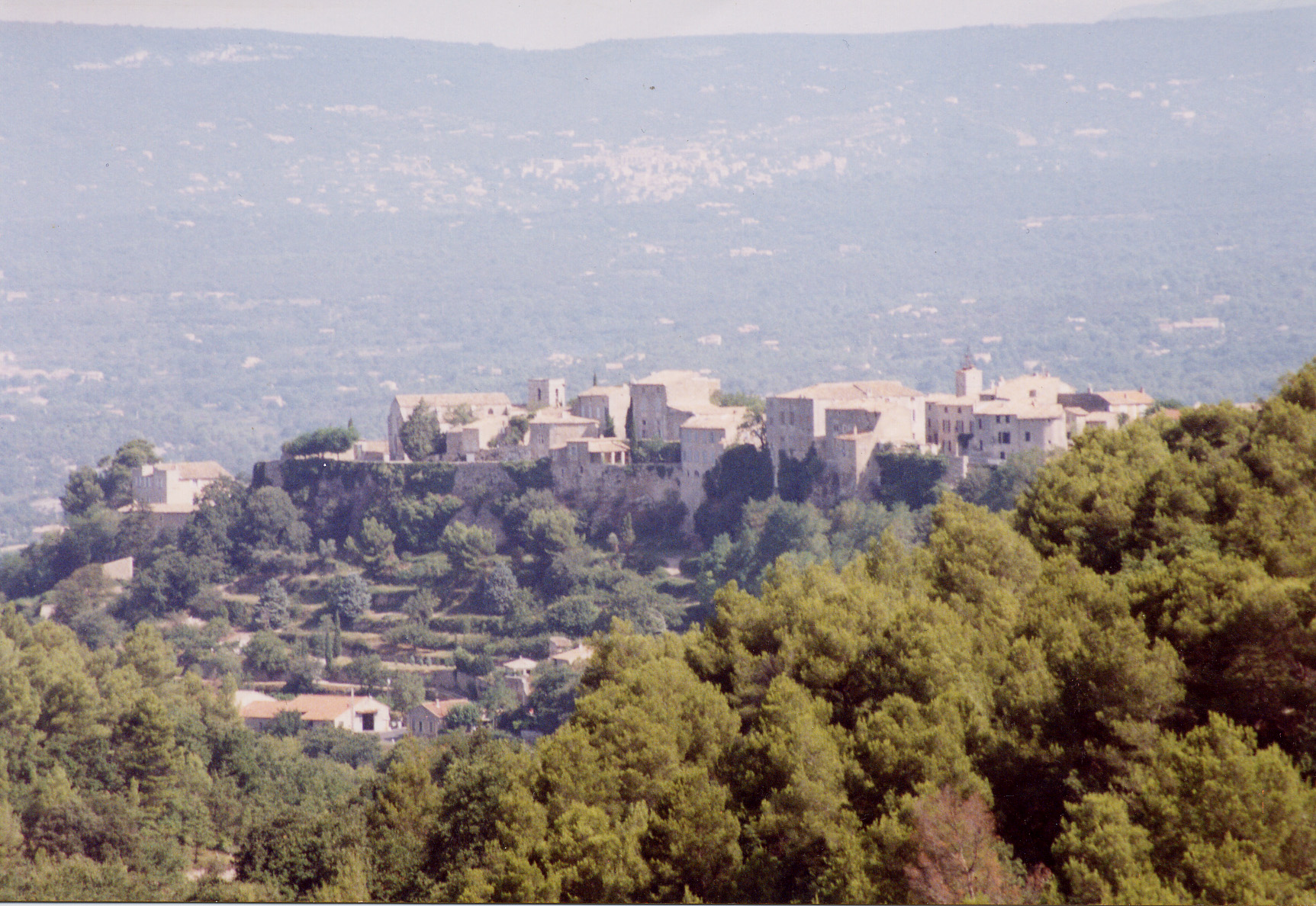
Ménerbes is Peter Mayle’s village from A Year in Provence, and it has aged better than the book. It stretches along a ridge like a ship, with a citadel at one end and a 14th-century church at the other, and it stays quiet even in August because there is almost nowhere to park.
Do not miss: the Maison de la Truffe et du Vin for a tasting, and the view over the vineyards from the citadel.
Stay: La Bastide de Marie, a vineyard hotel ten minutes away with 14 rooms and its own wine.
Getting there: 15 minutes by car from Gordes.
4. Lourmarin, Provence
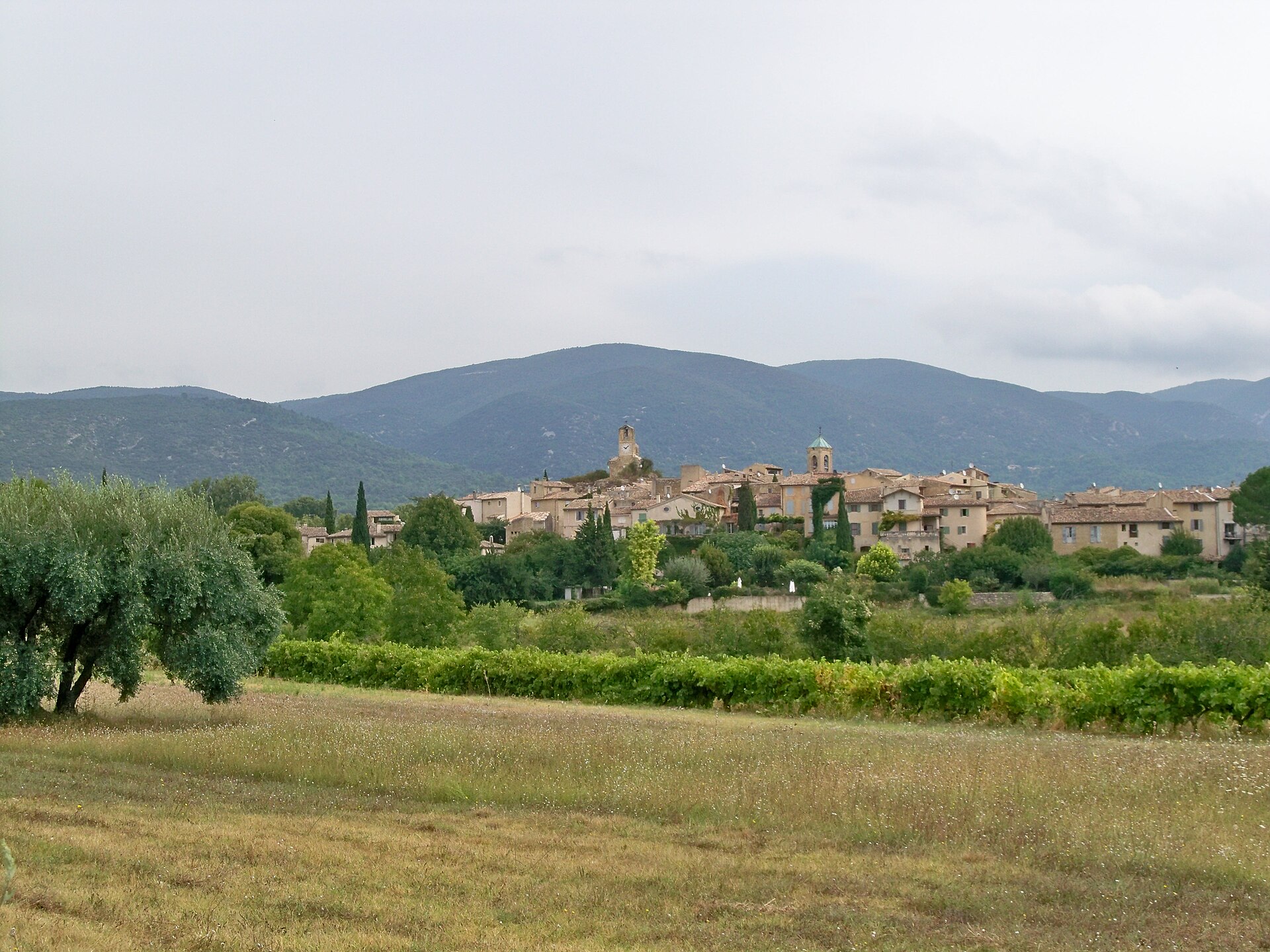
Lourmarin is the Luberon village to stay in rather than just visit. It is flat, which is rare, with a Renaissance château, three excellent cafés on the main square and a Friday market that draws the whole valley. Albert Camus lived here and is buried in the village cemetery.
Do not miss: Friday market morning, then lunch at one of the terraces on Place de l’Ormeau.
Stay: Le Moulin de Lourmarin, an 18th-century oil mill turned boutique hotel in the centre of the village.
Getting there: 35 minutes by car from Aix-en-Provence, 1 hour from Marseille airport.
5. Moustiers-Sainte-Marie, Provence
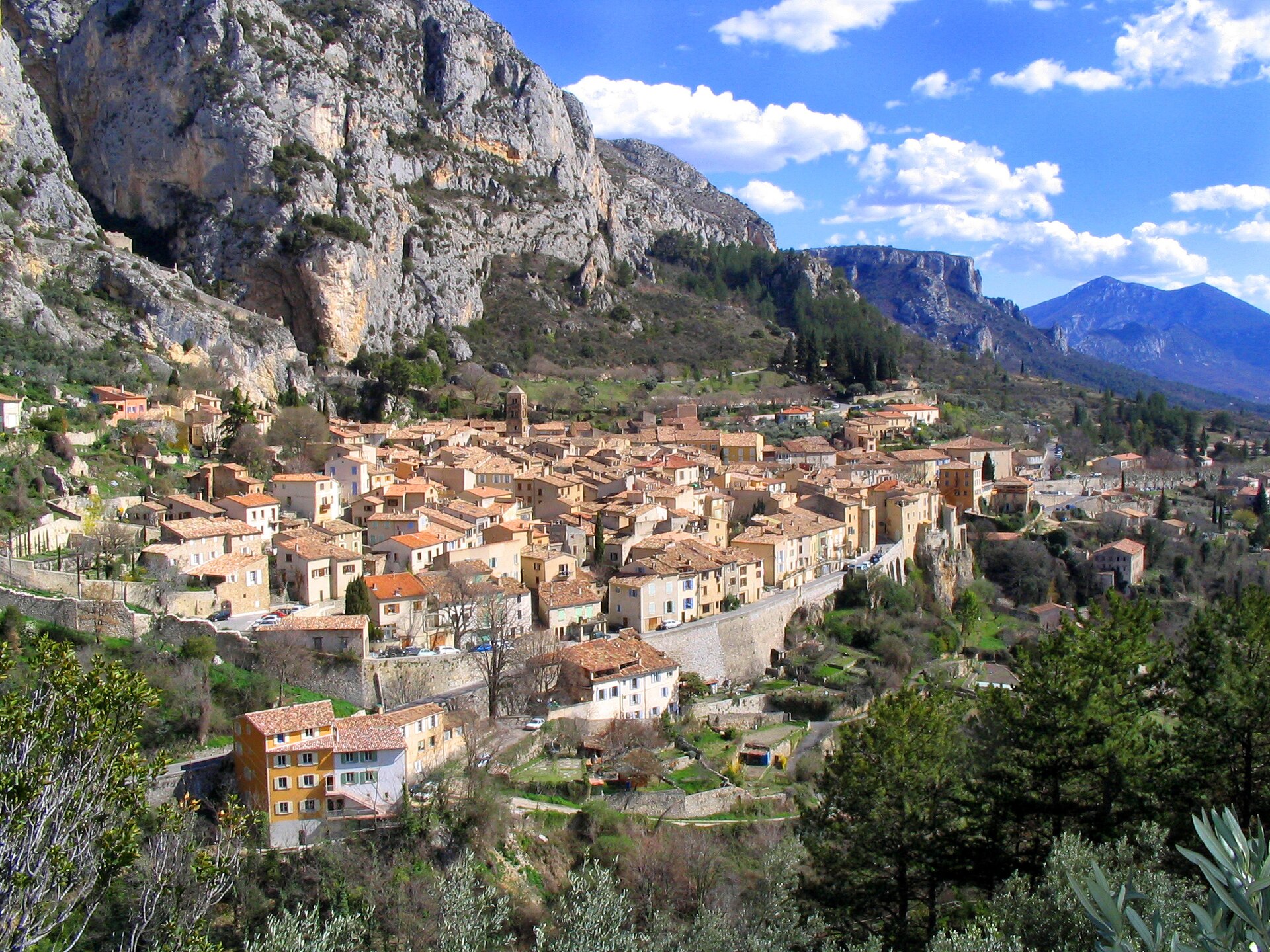
Moustiers is wedged into a cleft in the limestone cliffs at the entrance to the Verdon Gorge, with a gilded star suspended on a chain between the two rock faces above the village. It has been famous for its faience pottery since the 17th century and there are still a dozen workshops.
Do not miss: the 262-step climb to the Chapelle Notre-Dame de Beauvoir for the view, then a drive along the Verdon Gorge road to the turquoise Lac de Sainte-Croix.
Stay: La Bastide de Moustiers, Alain Ducasse’s 13-room country house with a kitchen garden that supplies the restaurant.
Getting there: 1 hour 30 by car from Aix-en-Provence. Combine it with the Luberon villages on a loop.
6. Èze, French Riviera
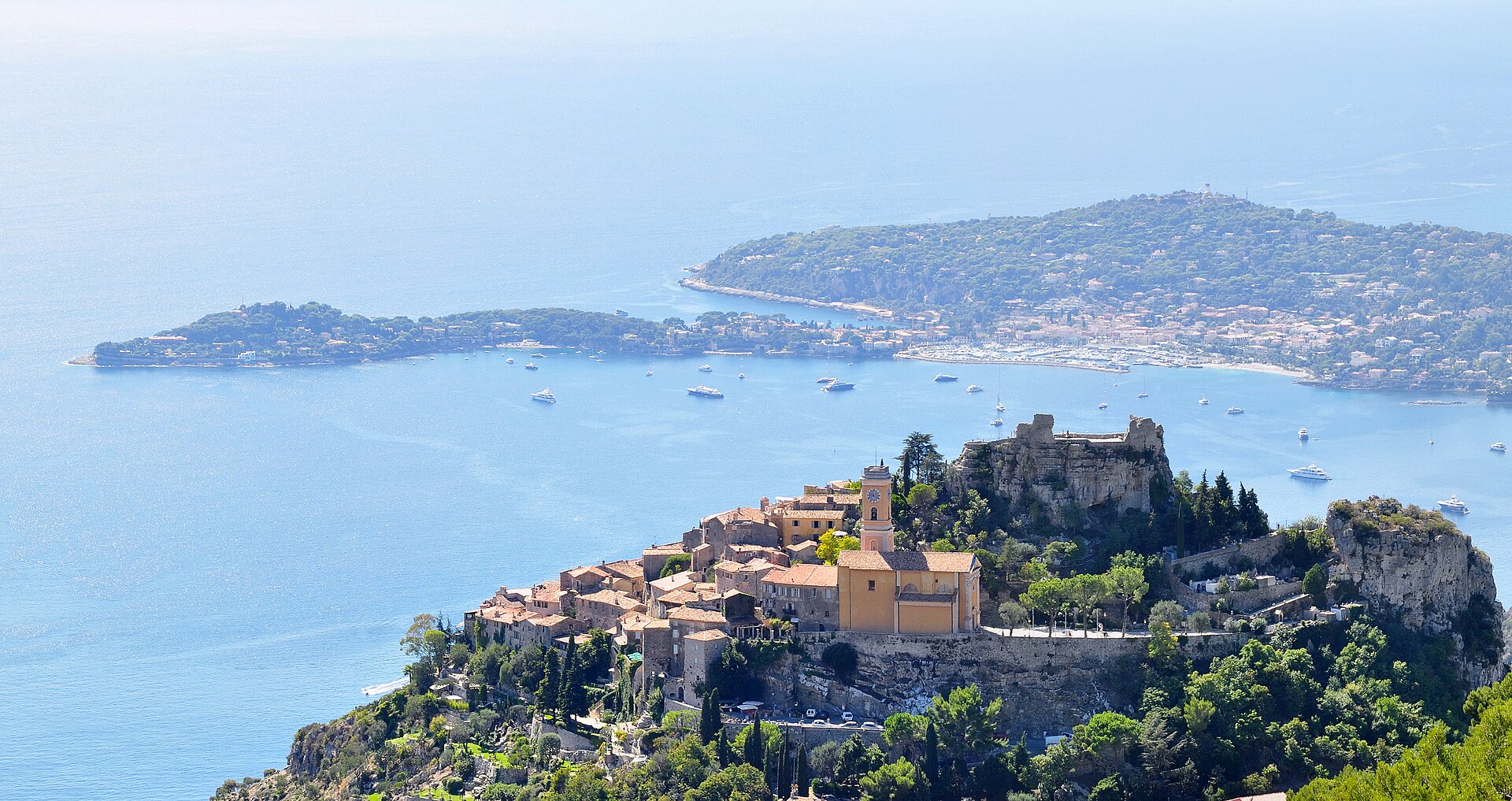
Èze is a medieval village perched 430 metres straight above the Mediterranean between Nice and Monaco. The streets are too narrow for cars, the houses are built into the rock, and at the top is an exotic garden with the best view on the whole Riviera. It is also, for obvious reasons, one of the most romantic villages in France and a fixture on the most unique honeymoon spots list.
Do not miss: the Jardin Exotique at the summit, and the Nietzsche path, a steep 45-minute walk down to Èze-sur-Mer and the beach.
Stay: Château de la Chèvre d’Or, a Relais & Châteaux hotel built into the village walls with a two-Michelin-star restaurant and an infinity pool over the sea. Château Eza next door is smaller and slightly less expensive.
Getting there: 25 minutes by car or bus 82 from Nice; the Èze-sur-Mer train station is at the bottom of the Nietzsche path.
7. Saint-Paul-de-Vence, French Riviera
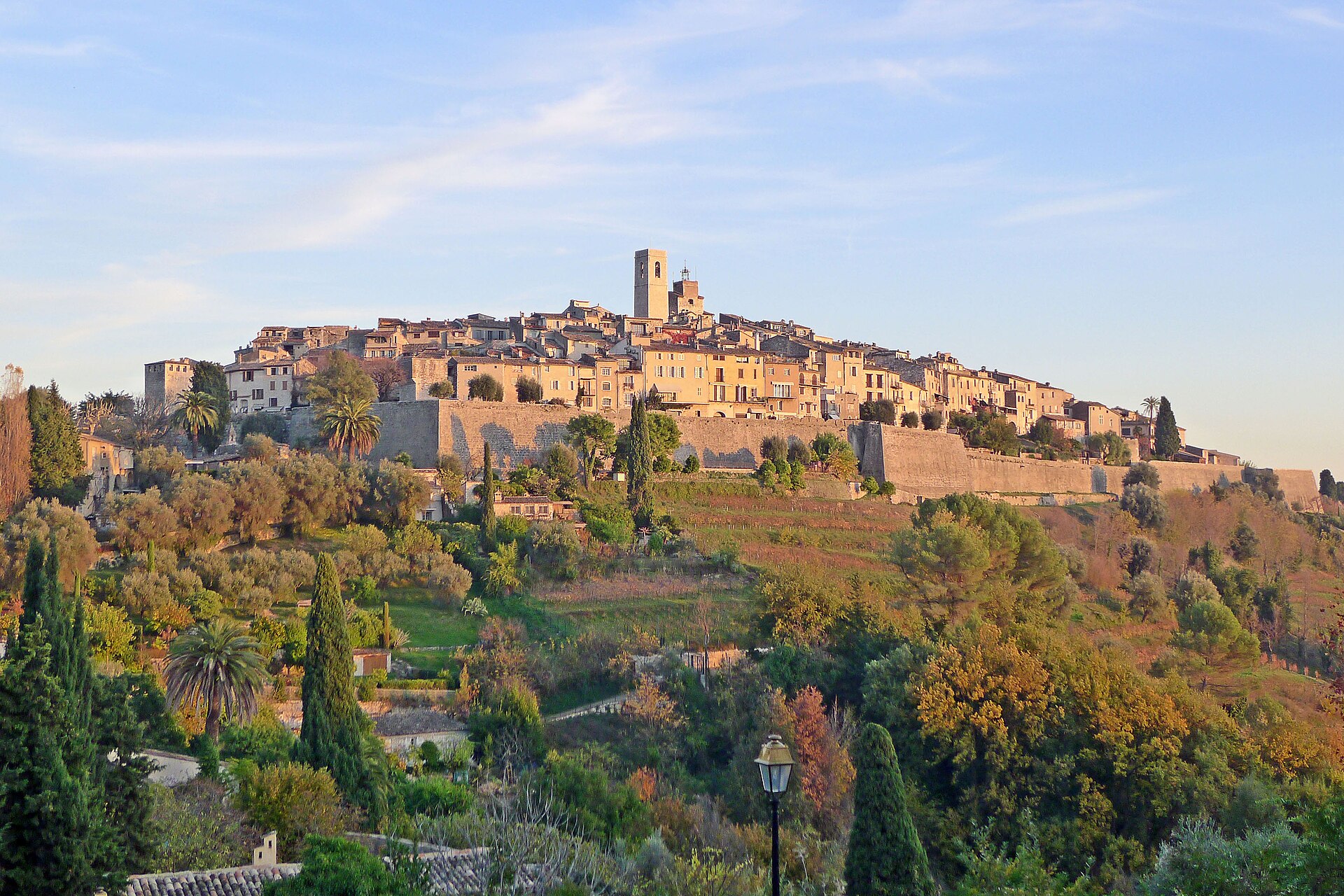
Saint-Paul-de-Vence is a walled hilltop village 20 minutes inland from Nice that became the artists’ village of the Riviera in the 1920s. Chagall is buried in the cemetery, Matisse and Picasso paid their bills at the Colombe d’Or in paintings, and the Fondation Maeght just outside the walls is one of the best modern art museums in Europe.
Do not miss: lunch on the terrace of La Colombe d’Or, surrounded by the art, and a walk along the ramparts at sunset once the day-trippers have left.
Stay: La Colombe d’Or itself, if you can get one of its 25 rooms; otherwise Le Saint-Paul, a Relais & Châteaux hotel inside the walls.
Getting there: 25 minutes by car or bus 400 from Nice.
The most beautiful villages in France: Alsace, Burgundy, the Loire and the Dordogne
Alsace is the fairytale France of half-timbered houses and window boxes, and three of its wine villages make this list. Burgundy and the Loire add stone, abbeys and châteaux. The Dordogne, further south-west, is castle country, with villages built into the cliffs above the river.
8. Riquewihr, Alsace
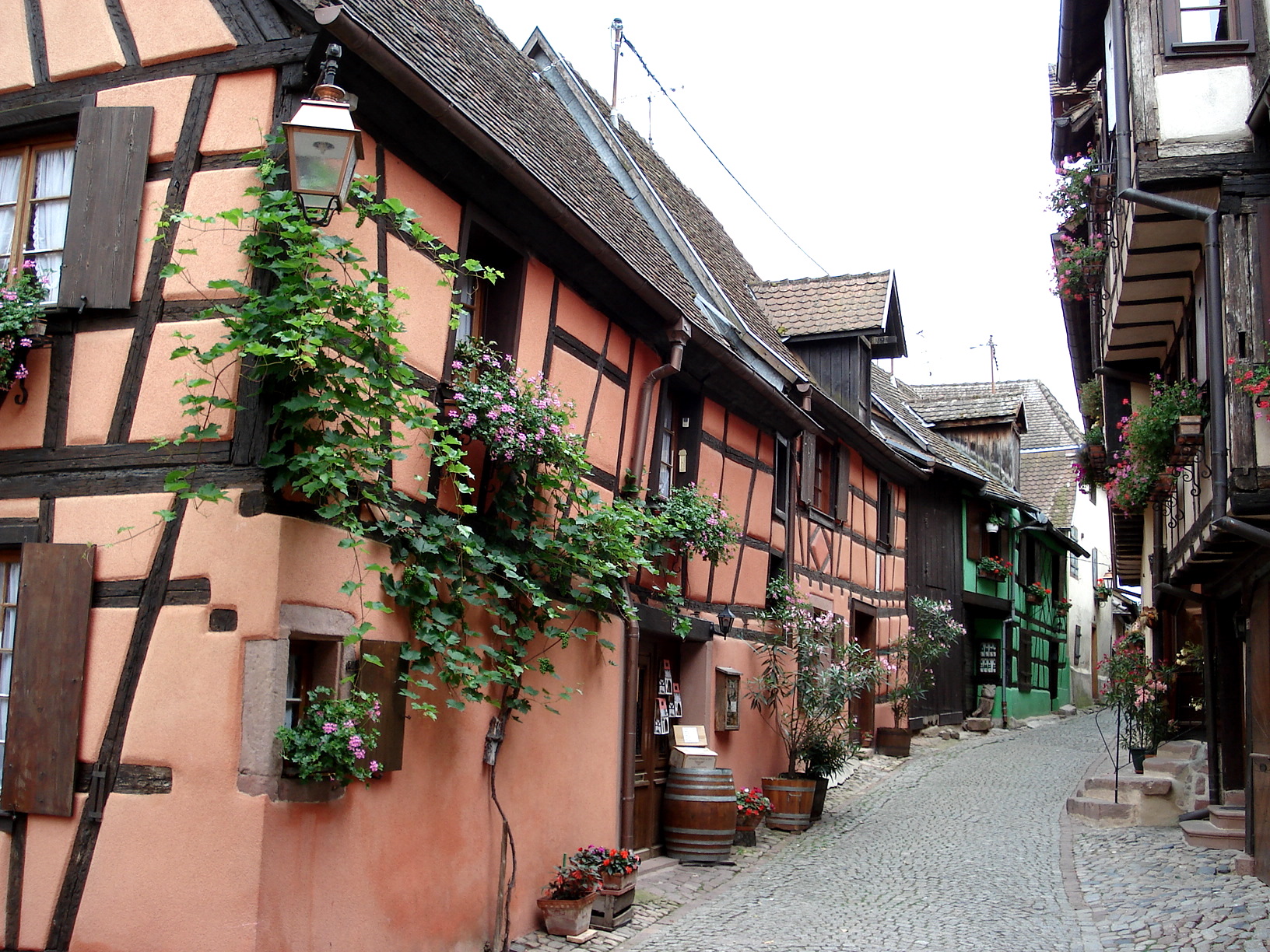
Riquewihr is the most beautiful village on the Alsace wine route and one of the most beautiful in France, full stop. It survived both world wars almost untouched, so the entire village is 16th- and 17th-century: painted half-timbered houses in yellow, pink and green, cobbled lanes, and vineyards running right up to the medieval walls. Locals will tell you it inspired the village in Beauty and the Beast, and in December it has one of the best Christmas markets in Europe. For good reason, it also appears in the fairytale towns in Europe list.
Do not miss: a Riesling tasting at Hugel & Fils, whose family has made wine here since 1639, and the view back over the village from the vineyard path above the Dolder tower.
Stay: Hôtel Le Schoenenbourg, at the edge of the village with vineyard views, or any of the winemakers’ guesthouses inside the walls.
Getting there: 15 minutes by car from Colmar, 1 hour from Strasbourg. Base in Colmar if you want to visit without a car; buses run but are infrequent.
9. Eguisheim, Alsace
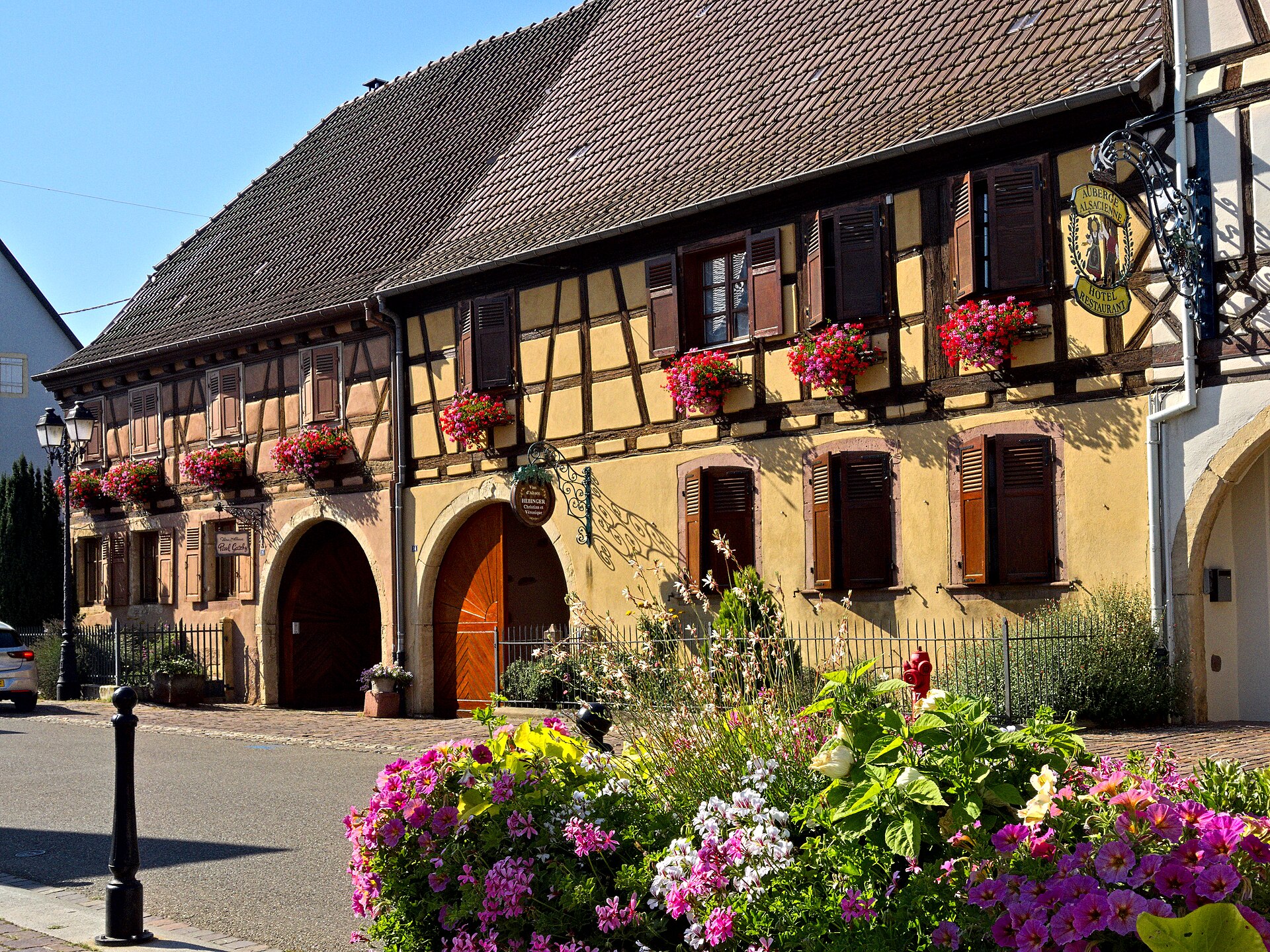
Eguisheim is built in concentric circles around its castle, so you walk a ring of flower-covered medieval houses that eventually brings you back to where you started. It was voted France’s favourite village in 2013 and is smaller and quieter than Riquewihr, especially in the evening.
Do not miss: the Rue du Rempart loop, and the three ruined castles on the hill above for a view over the whole plain.
Stay: Hôtel Saint-Hubert, a family-run hotel with a garden pool five minutes from the centre.
Getting there: 10 minutes by car from Colmar; combine with Riquewihr and Kaysersberg in a day.
10. Kaysersberg, Alsace
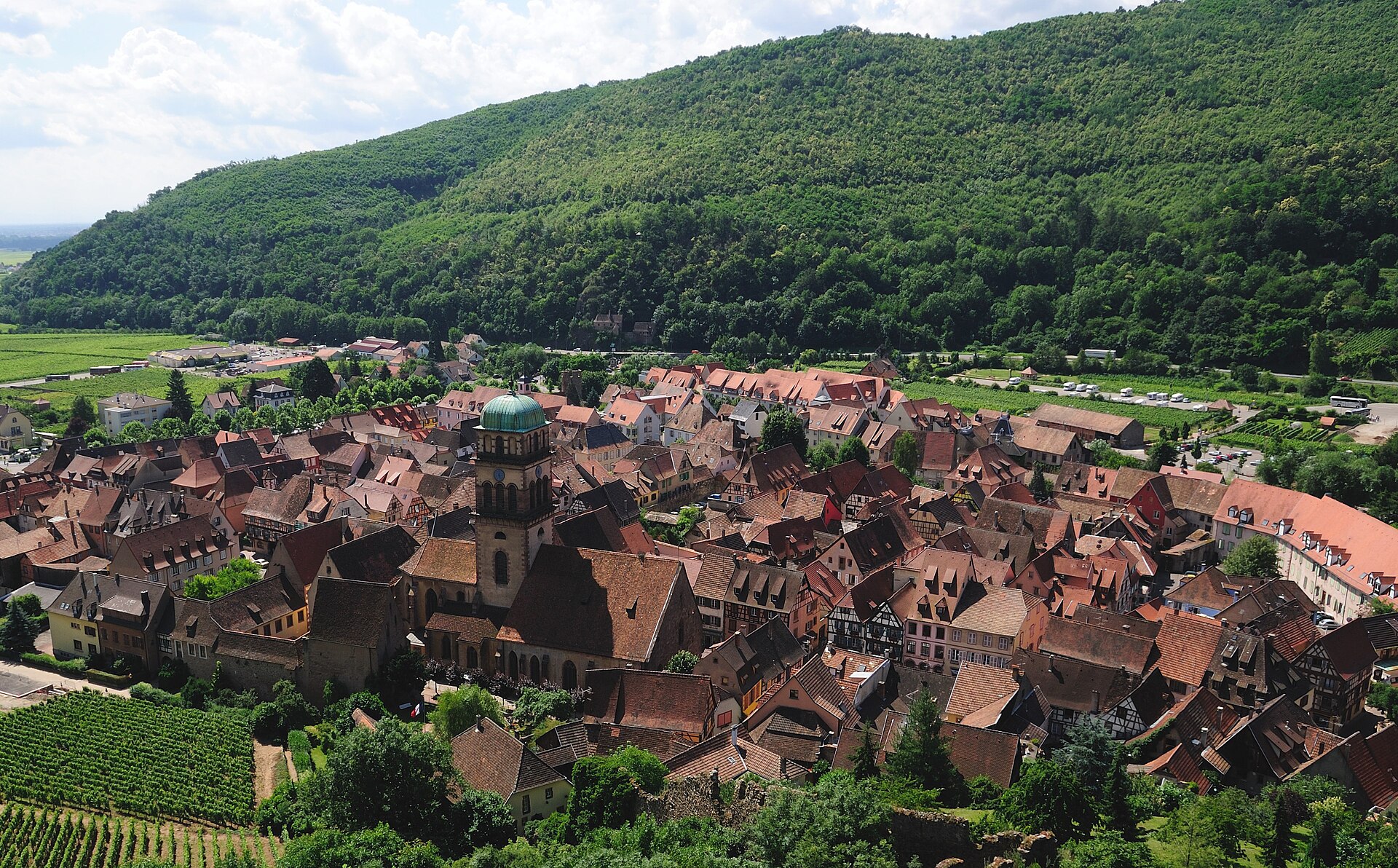
Taxiarchos228 via Wikimedia Commons (CC BY-SA 3.0)
Kaysersberg has the fortified bridge, the ruined castle on the hill and the river running through the middle, which gives it something the other Alsace villages lack: water. Albert Schweitzer was born here and the village is a little less polished than Riquewihr, which many people prefer.
Do not miss: the 16th-century fortified bridge, and the walk up to the castle keep in the late afternoon.
Stay: Le Chambard, a Relais & Châteaux hotel with a spa and a two-Michelin-star restaurant run by Olivier Nasti.
Getting there: 15 minutes by car from Colmar.
11. Vézelay, Burgundy
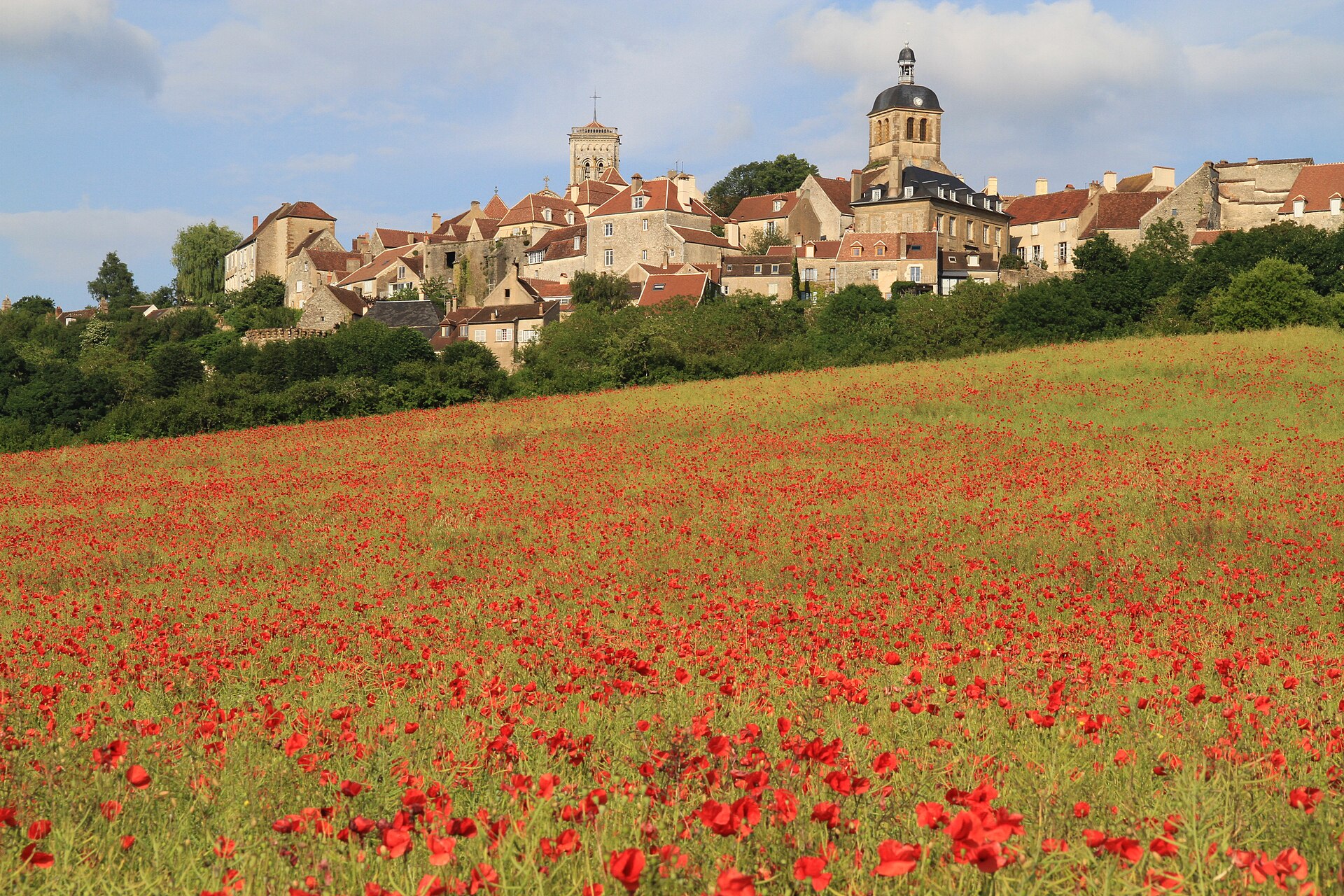
Vézelay is a single steep street climbing to one of the great Romanesque churches of Europe. The Basilica of Sainte-Marie-Madeleine has been a pilgrimage site since the 11th century and the starting point of one of the routes to Santiago de Compostela, and it still has the feel of a place people have walked to for a thousand years. The whole hill is a UNESCO World Heritage Site.
Do not miss: the basilica at noon around the summer solstice, when the sun lines up exactly with the nave, and the view from the terrace behind it over the Morvan hills.
Stay: Hôtel de la Poste et du Lion d’Or at the bottom of the hill, a former coaching inn.
Getting there: 2 hours 30 by car from Paris; the nearest station is Sermizelles, 10 km away, with a bus or taxi up the hill.
12. Montrésor, Loire Valley
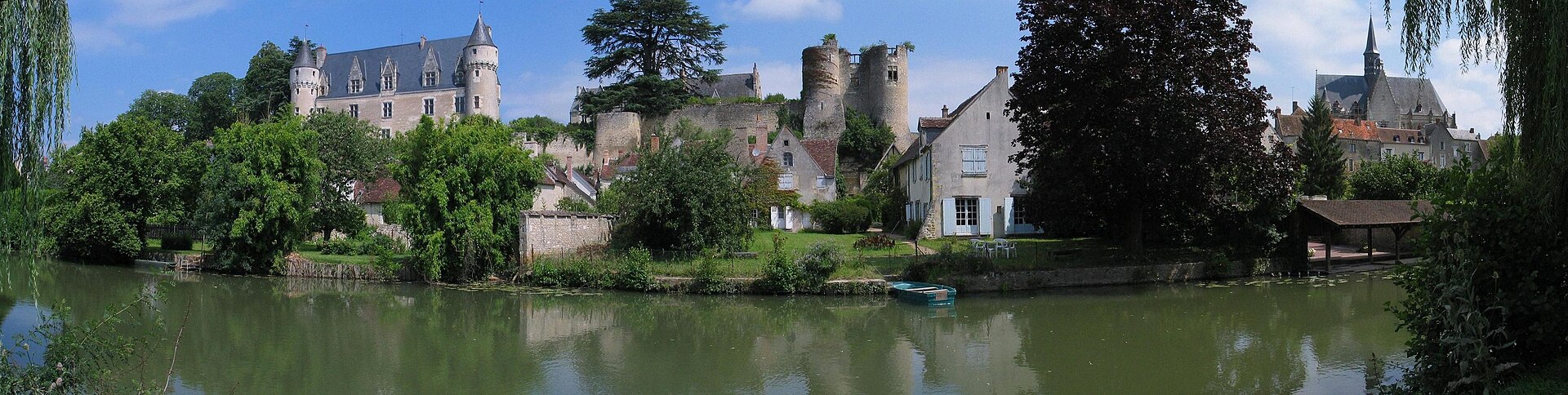
Montrésor is the Loire Valley’s best-kept secret: a village of 350 people wrapped around a Renaissance château on a rock above the Indrois river, 45 minutes from Tours. The château was bought by a Polish count in 1849 and is still owned by his family, so inside it is a 19th-century time capsule rather than a museum. Pair it with the bigger names in our guide to the Loire Valley in three days.
Do not miss: the Balcons de l’Indrois, a riverside path looking up at the château, and the Friday night summer market.
Stay: the Loire has few hotels in the villages themselves; stay at Château de Chissay or in Loches, 20 minutes away.
Getting there: 45 minutes by car from Tours, 2 hours 30 from Paris.
13. La Roque-Gageac, Dordogne
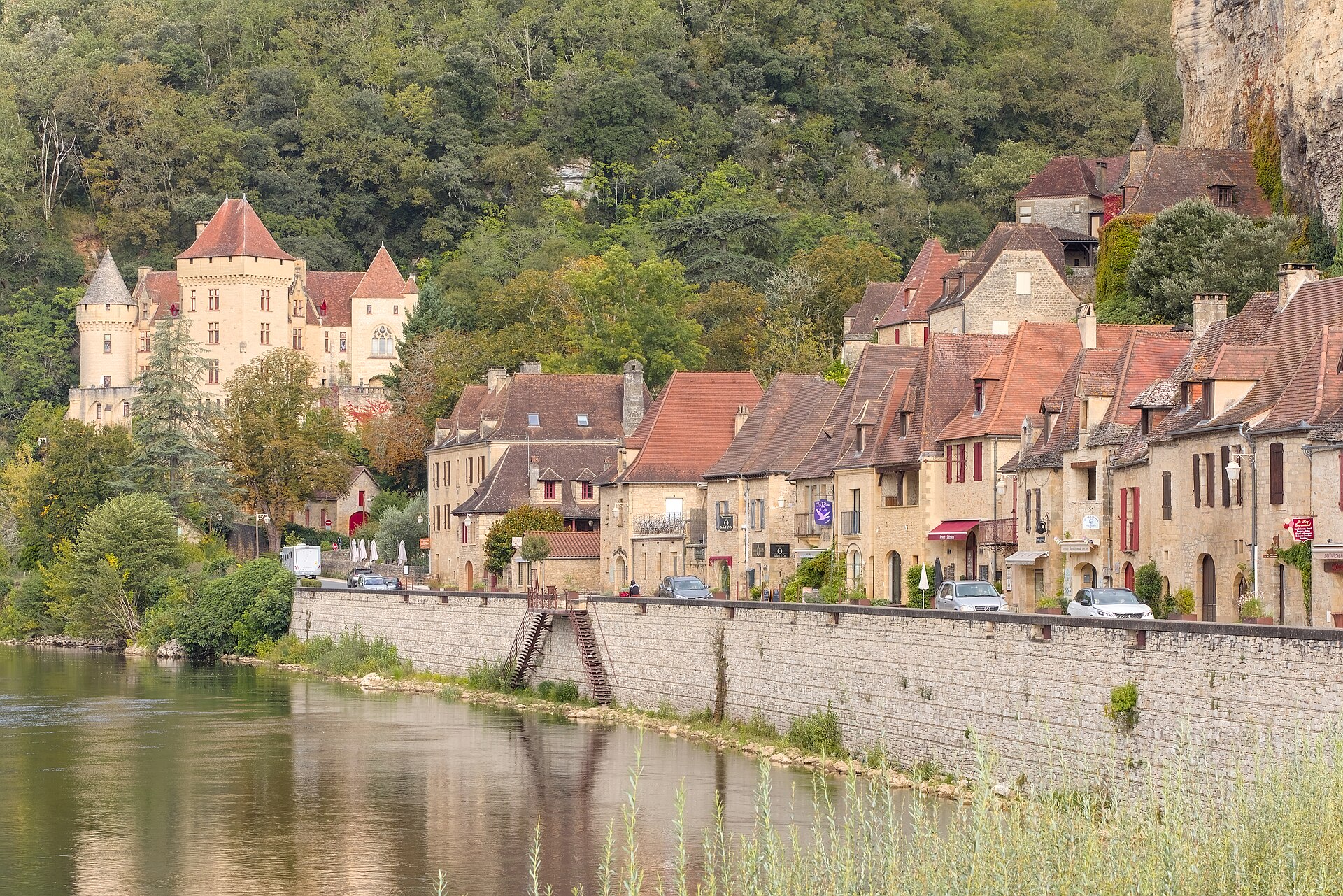
La Roque-Gageac is a single row of golden houses squeezed between a sheer cliff and the Dordogne river, facing south, so it catches the sun all day and grows palms and banana trees in a region known for walnuts. It is one of the most photographed villages in south-west France and the river in front of it is the best place in the Dordogne to take a boat.
Do not miss: a gabarre boat trip from the quay, which gives you the view of the village the postcards use, and the troglodyte fort cut into the cliff above.
Stay: La Belle Étoile, a riverside hotel and restaurant in the village, or Manoir de la Malartiè just across the bridge.
Getting there: 15 minutes by car from Sarlat, 2 hours 30 from Bordeaux.
14. Beynac-et-Cazenac, Dordogne
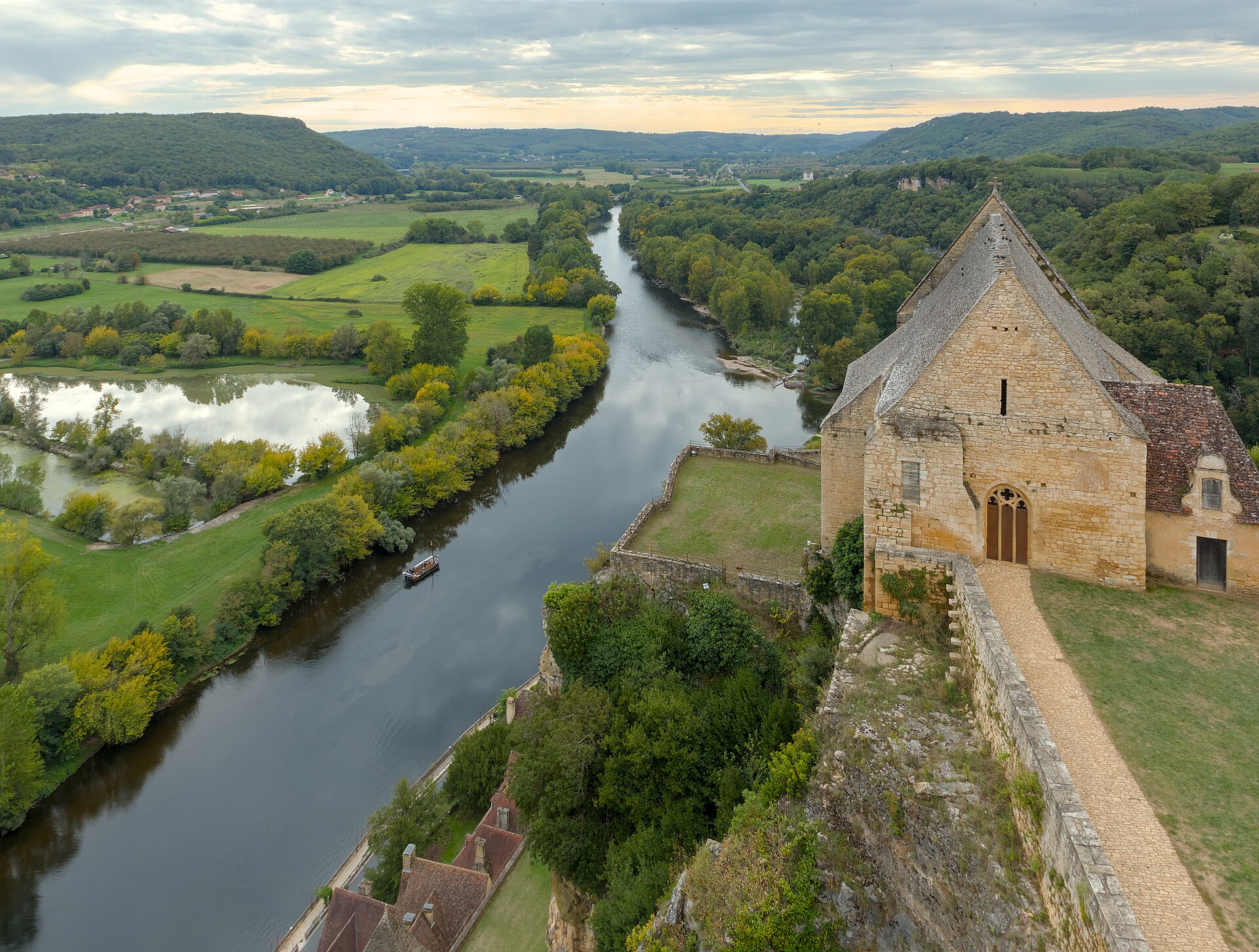
Five kilometres downstream from La Roque-Gageac, Beynac is a village of steep stone lanes climbing 150 metres from the river to one of the most imposing castles in France. Château de Beynac was Richard the Lionheart’s base in the region and, across the river, its old enemy Castelnaud still stares back at it.
Do not miss: the castle itself, which is far less restored than most and all the better for it, and the view from its ramparts along the river to Castelnaud.
Stay: Hôtel du Château, at the foot of the village on the river.
Getting there: 15 minutes by car from Sarlat; combine with La Roque-Gageac, Castelnaud and Domme in a single day.
The most beautiful villages in France: Normandy, Brittany, the Basque Country and the Alps
These six are spread across the north, west and east of France, so treat each pair as its own trip. Normandy and Brittany pair naturally with Paris; the Basque villages sit an hour from Biarritz; Yvoire is a day trip from Geneva or Annecy.
15. Mont-Saint-Michel, Normandy
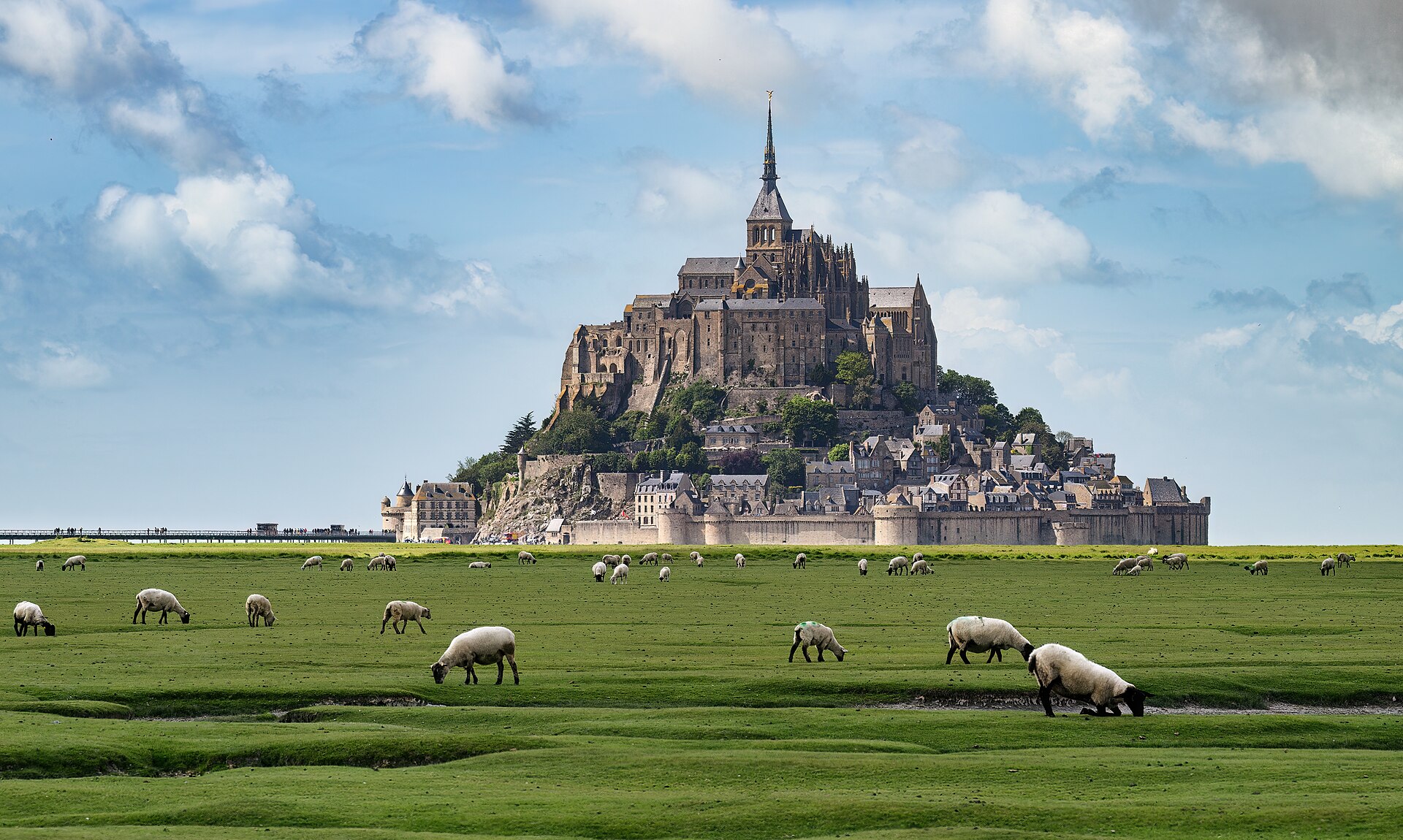
Mont-Saint-Michel is a village of around 30 permanent residents, which makes it the smallest place on this list and the most visited, with 2.5 million people a year. It earns its place anyway: an abbey built on a tidal island, rising 80 metres out of a bay with some of the highest tides in Europe, is not something you get used to. The trick is to stay overnight. By 7pm the day-trippers have gone and you have the single street and the ramparts almost to yourself.
Do not miss: the abbey at opening time or during the summer night visits, and the view of the Mont from the bay at high tide. Check the tide tables before you go; the island is only fully surrounded a few days a month.
Stay: Les Terrasses Poulard or Auberge Saint-Pierre inside the walls, or Le Relais Saint-Michel on the mainland for the classic view from your window.
Getting there: 1 hour 30 by car from Rennes, 4 hours from Paris. By train, TGV to Rennes then a direct bus (about 1 hour 15).
16. Giverny, Normandy
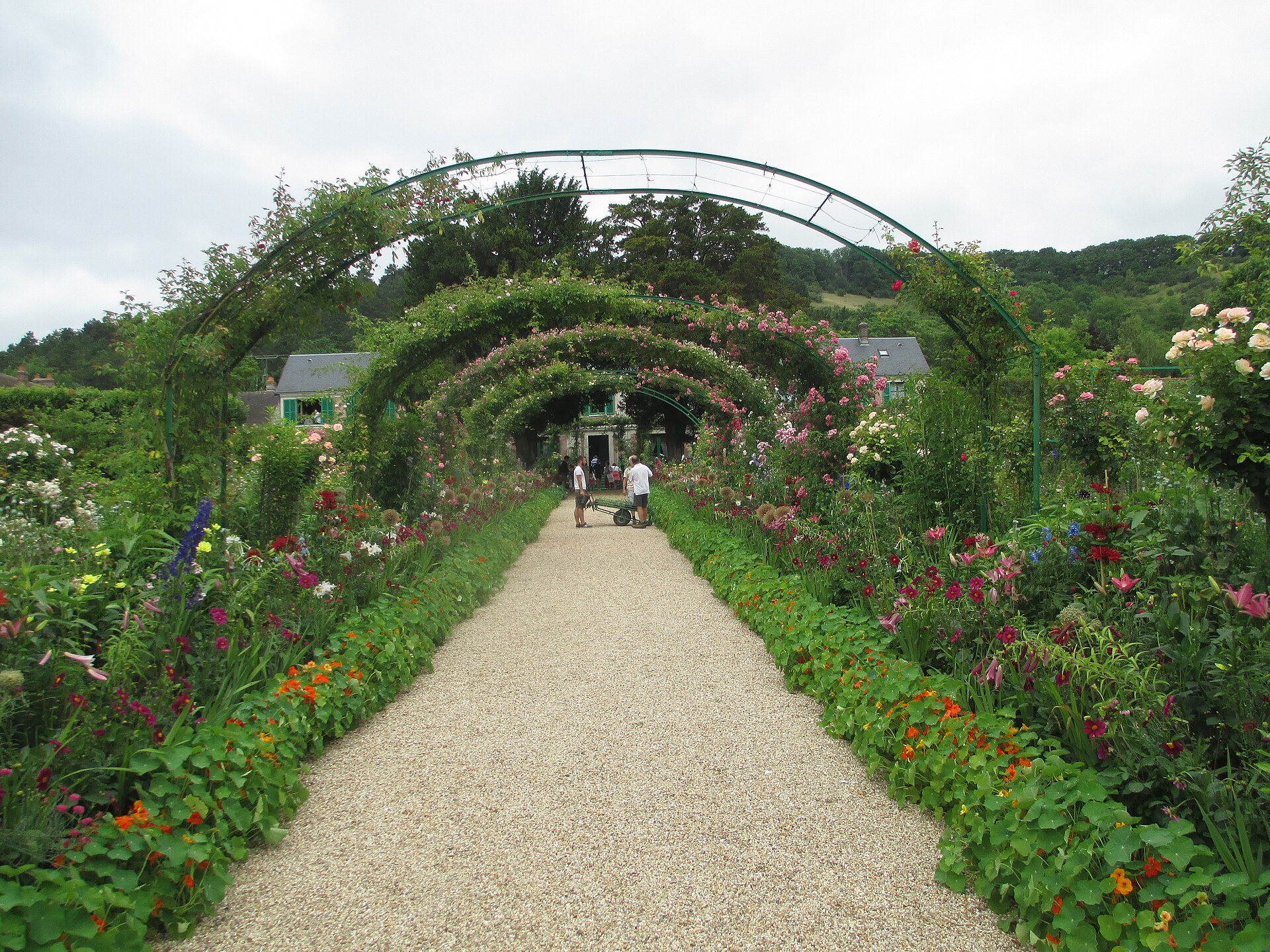
Giverny is one long street of stone houses an hour from Paris, and it would be a pretty village even without the garden at the end of it. The garden is Claude Monet’s, and he spent 43 years arranging it so that it looked like one of his paintings. The water lilies, the Japanese bridge and the pink house with green shutters are exactly as he left them.
Do not miss: the water garden before 10am, when the first coaches arrive, and the Musée des Impressionnismes down the street. The garden is open from April to the start of November only.
Stay: Le Jardin des Plumes, a 1912 villa with eight rooms and a Michelin-starred restaurant, five minutes’ walk from the garden.
Getting there: 45 minutes by train from Paris Saint-Lazare to Vernon, then a shuttle bus or 5 km cycle path to the village. One of the easiest day trips from Paris; pair it with 30 hidden locations in Paris for the rest of the week.
17. Locronan, Brittany
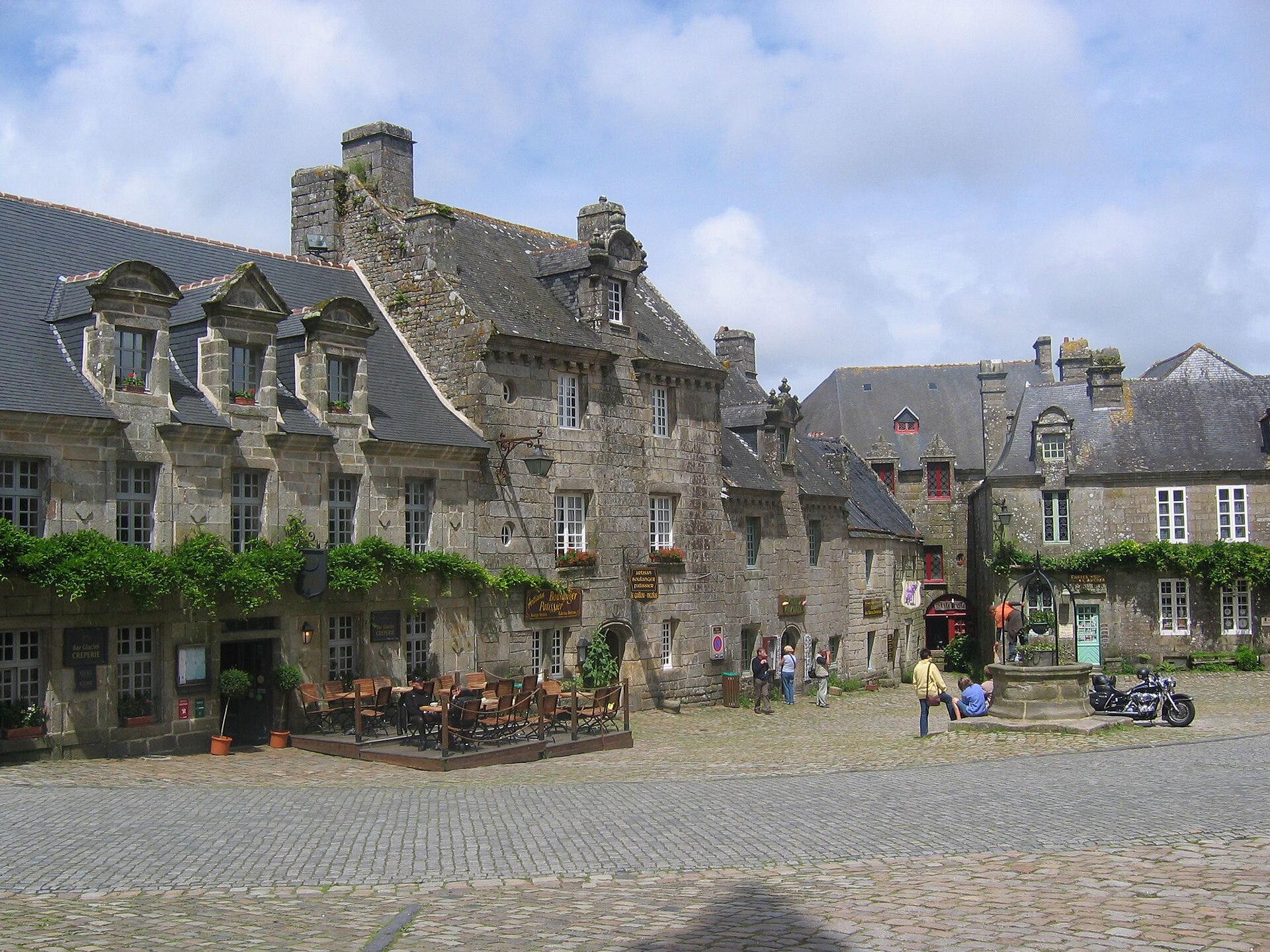
Locronan is a granite village in western Brittany that made its fortune weaving sailcloth in the 16th century and then stopped changing. There are no overhead wires, no road markings and no modern buildings, which is why Roman Polanski filmed Tess here and why it keeps appearing in period dramas.
Do not miss: the main square with its 15th-century church and old well, and a buckwheat galette at any of the crêperies around it. In July, the Petite Tromenie procession, a pilgrimage walk held every year since the Middle Ages.
Stay: Hôtel Le Pré de Locronan at the edge of the village, or in Quimper, 20 minutes away.
Getting there: 20 minutes by car from Quimper, which has a TGV connection to Paris in 3 hours 30.
18. Rochefort-en-Terre, Brittany
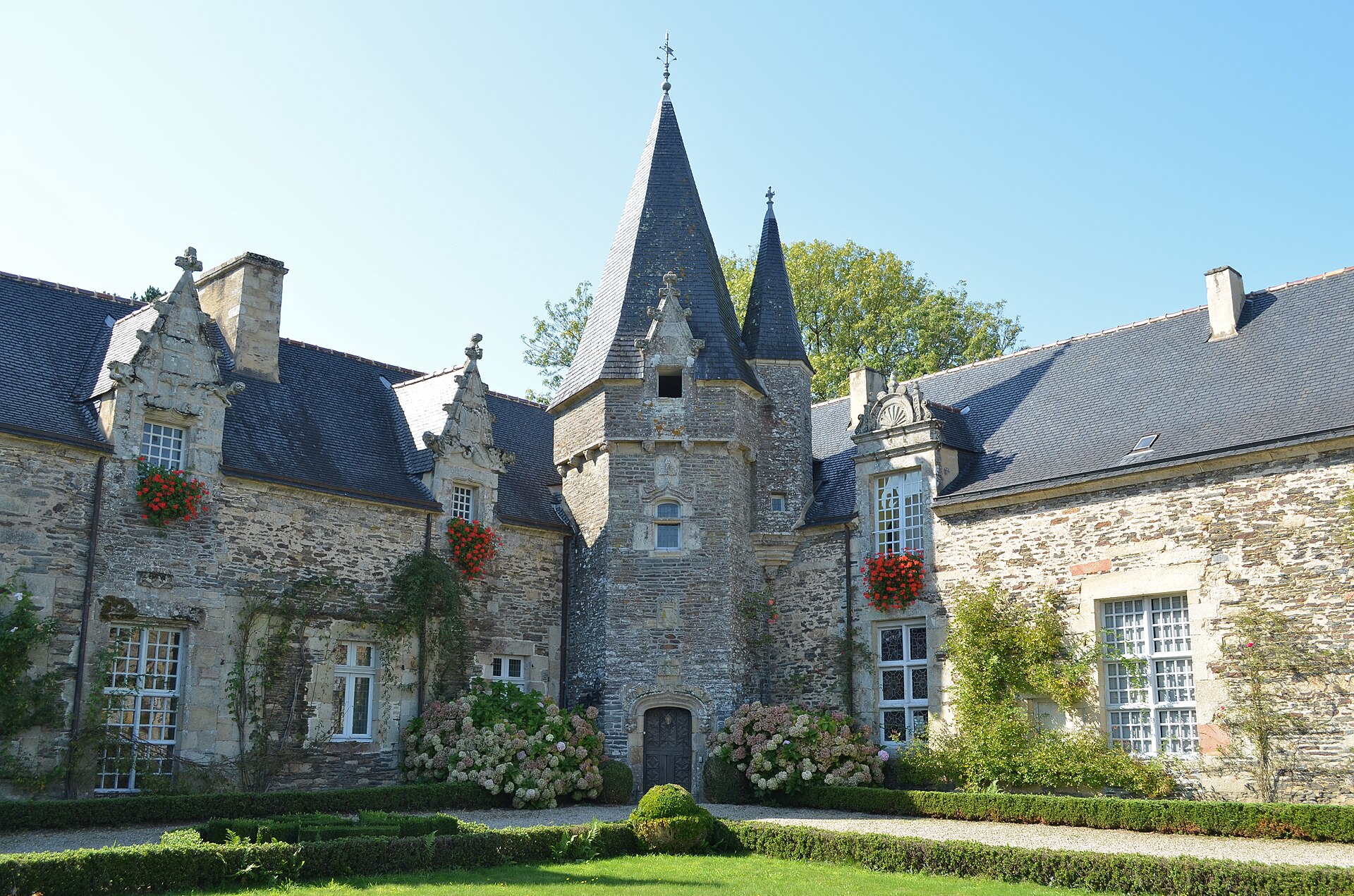
Rochefort-en-Terre is Brittany’s flower village: slate-roofed 16th-century houses hung with geraniums, a castle on the rock above and antique shops in half the ground floors. It won France’s favourite village in 2016 and, in December, the Christmas lights draw visitors from across the region.
Do not miss: Place du Puits and the Rue du Porche, and the café terraces when the sun is on them.
Stay: Le Pelican, a small hotel in a 16th-century house on the main square.
Getting there: 1 hour by car from Rennes or Nantes; the nearest station is Questembert, 10 km away.
19. Espelette, Basque Country
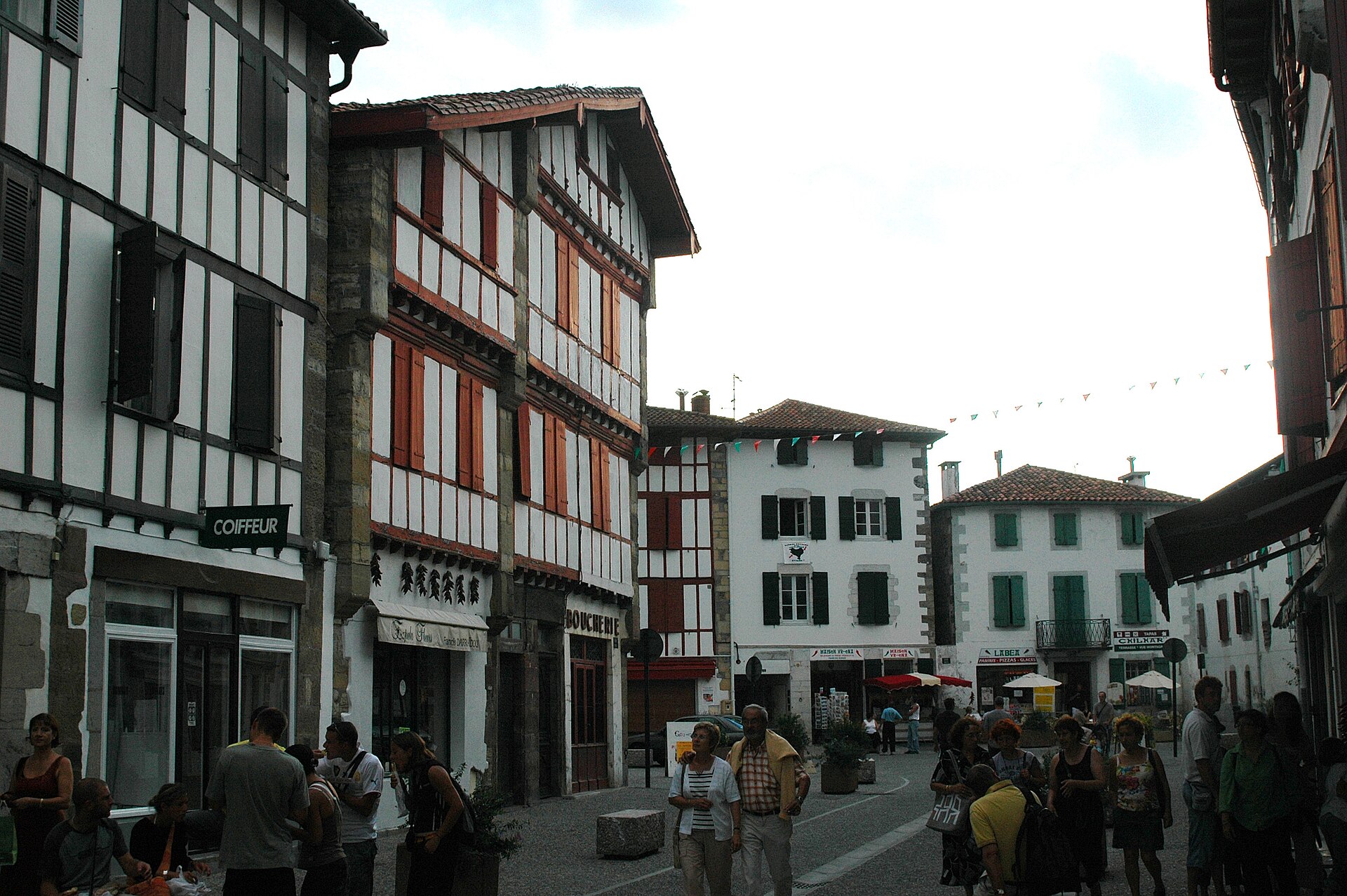
Espelette is a village of white houses with blood-red shutters, each one hung with strings of drying red chilli peppers. The Espelette pepper has had the same protected status as Champagne since 2000 and the whole village revolves around it. This is the best food village in France: pepper, sheep’s cheese, Bayonne ham and Basque cake, all within a 20-minute walk.
Do not miss: the pepper festival on the last weekend of October, and a tasting at the Atelier du Piment just outside the village. Then drive 10 minutes to Ainhoa, another Plus Beau Village, for lunch.
Stay: Hôtel Euzkadi, a family-run hotel in the centre with a pool and a restaurant serving the classic Basque dishes.
Getting there: 30 minutes by car from Biarritz airport, 20 minutes from Saint-Jean-de-Luz.
20. Yvoire, Lake Geneva
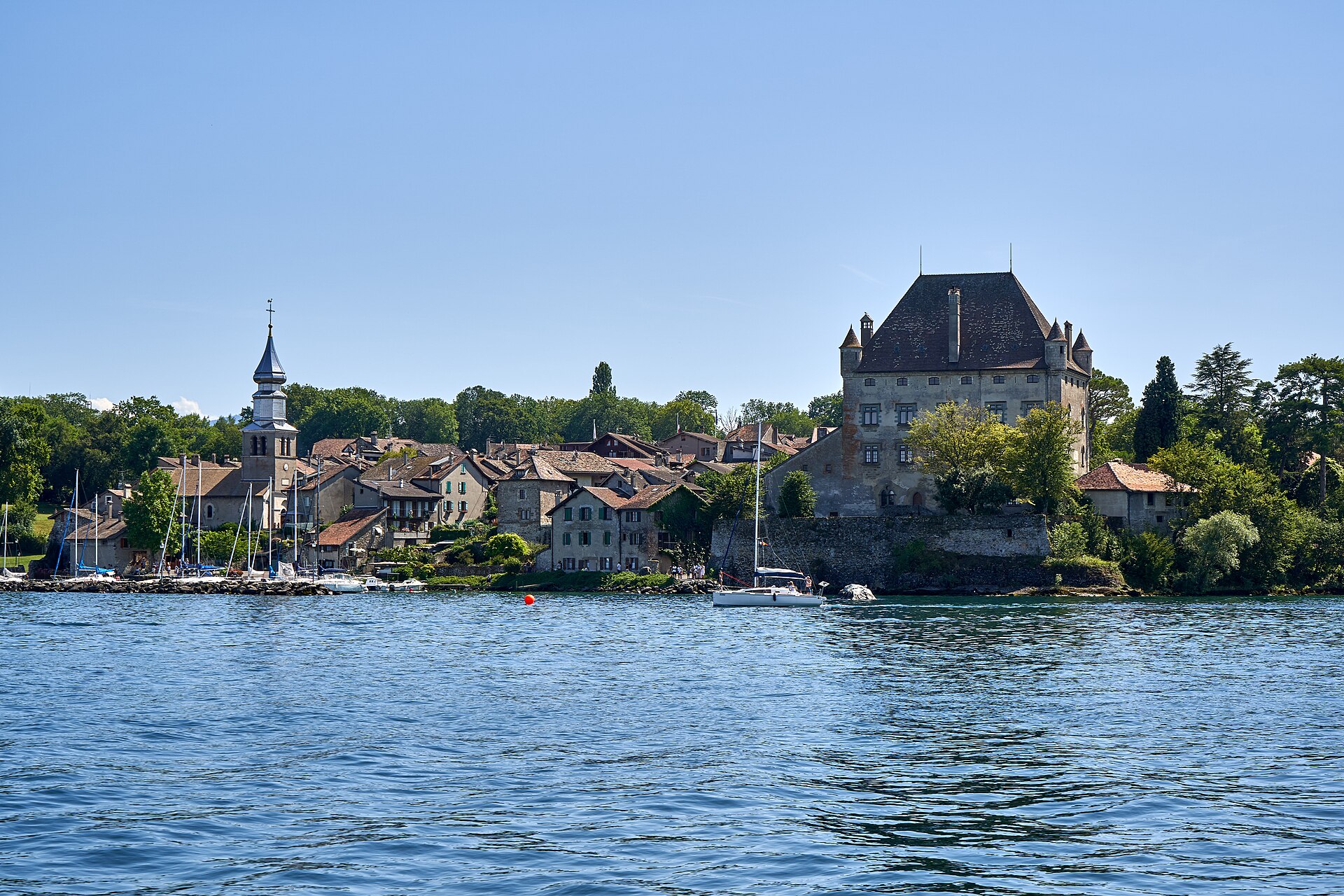
Yvoire is a 700-year-old fortified village on the French shore of Lake Geneva, 30 minutes from the Swiss border. Its stone houses are so covered in wisteria and geraniums that it has won every flower competition in France, and the lake laps right up to the walls. It is also the best place on this list to arrive by boat.
Do not miss: the Jardin des Cinq Sens, a medieval-style garden inside the castle grounds, and a lake perch dinner on one of the terraces over the water.
Stay: Hôtel Le Pré de la Cure, right by the lake, or in Annecy, an hour away, if you want a larger town.
Getting there: 40 minutes by car from Geneva, or a 30-minute CGN ferry from Nyon in Switzerland.
The most beautiful villages in France: the South-West, Corsica and the Jura
The last five are the ones most visitors never reach, and the reward for going is having them almost to yourself. The three south-western villages string together on a two-day drive between Toulouse and Limoges; Corsica and the Jura are trips of their own.
21. Saint-Cirq-Lapopie, Lot
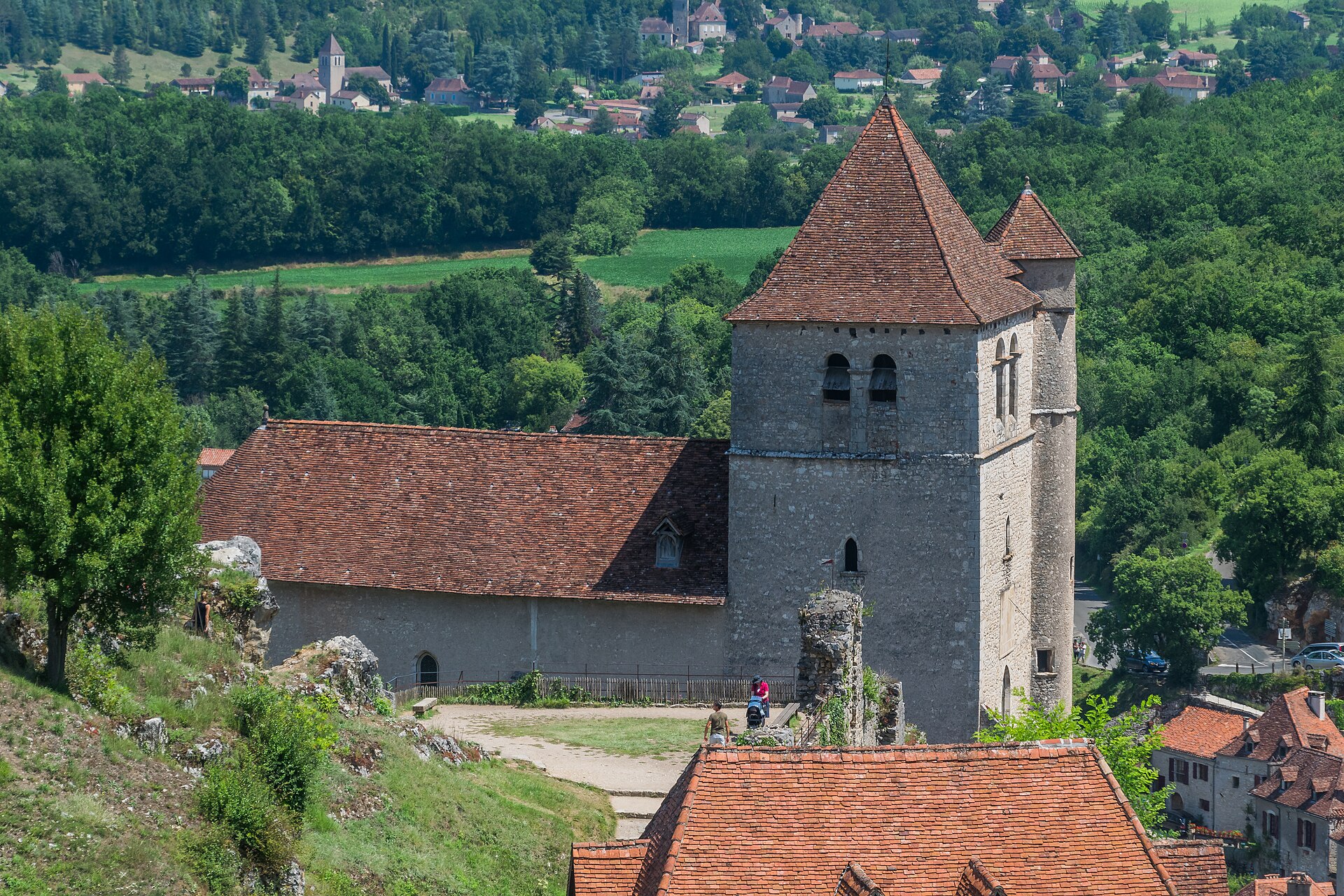
Saint-Cirq-Lapopie clings to a cliff 100 metres above a bend in the Lot river, a stack of 13th- to 16th-century houses with steep brown roofs and a fortified church on the edge of the drop. It was voted France’s favourite village in 2012 and the surrealist André Breton, who had a house here, said he had “stopped wishing to be anywhere else.”
Do not miss: the view from the ruined castle rock above the village, and the towpath along the Lot carved into the cliff face at Bouziès, a 10-minute drive away.
Stay: Hôtel Le Saint Cirq, just below the village with a pool and the cliff as its backdrop, or Auberge du Sombral in the village square.
Getting there: 35 minutes by car from Cahors, 1 hour 45 from Toulouse.
22. Conques, Aveyron
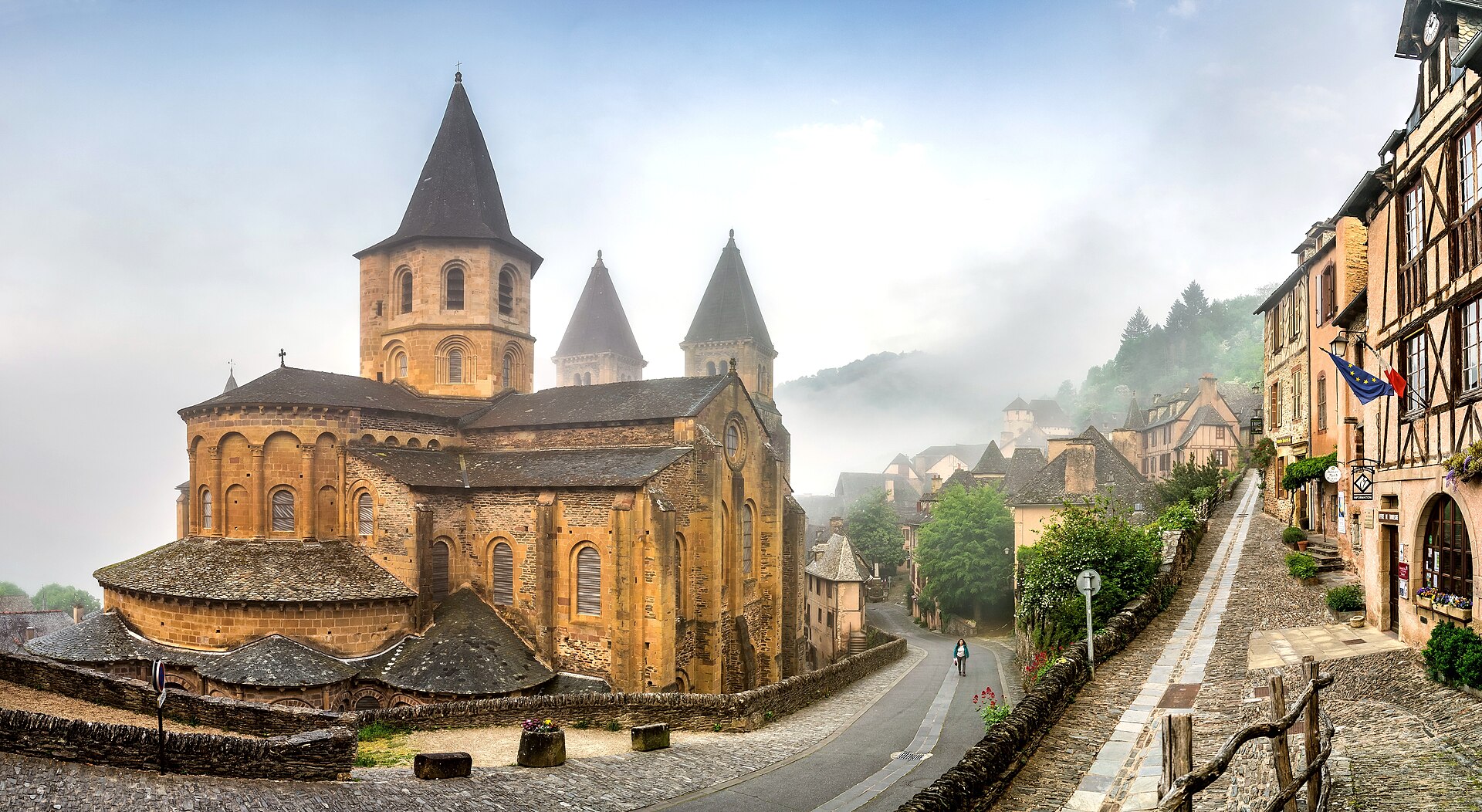
Conques is a medieval pilgrimage village hidden in a wooded gorge, built around the Abbey of Sainte-Foy and its 11th-century tympanum of the Last Judgement, one of the masterpieces of Romanesque sculpture. The abbey’s modern stained glass was designed by Pierre Soulages and, at night, the whole village is lit by lantern. It is one of the quietest and most atmospheric places in France.
Do not miss: the abbey treasury, which holds the 9th-century golden reliquary of Sainte Foy, and the evening organ concert and tympanum talk given by the monks in summer.
Stay: Hôtel Sainte-Foy, opposite the abbey, in a 17th-century house with a terrace overlooking the valley.
Getting there: 45 minutes by car from Rodez, 2 hours from Toulouse. No public transport worth the name.
23. Collonges-la-Rouge, Corrèze
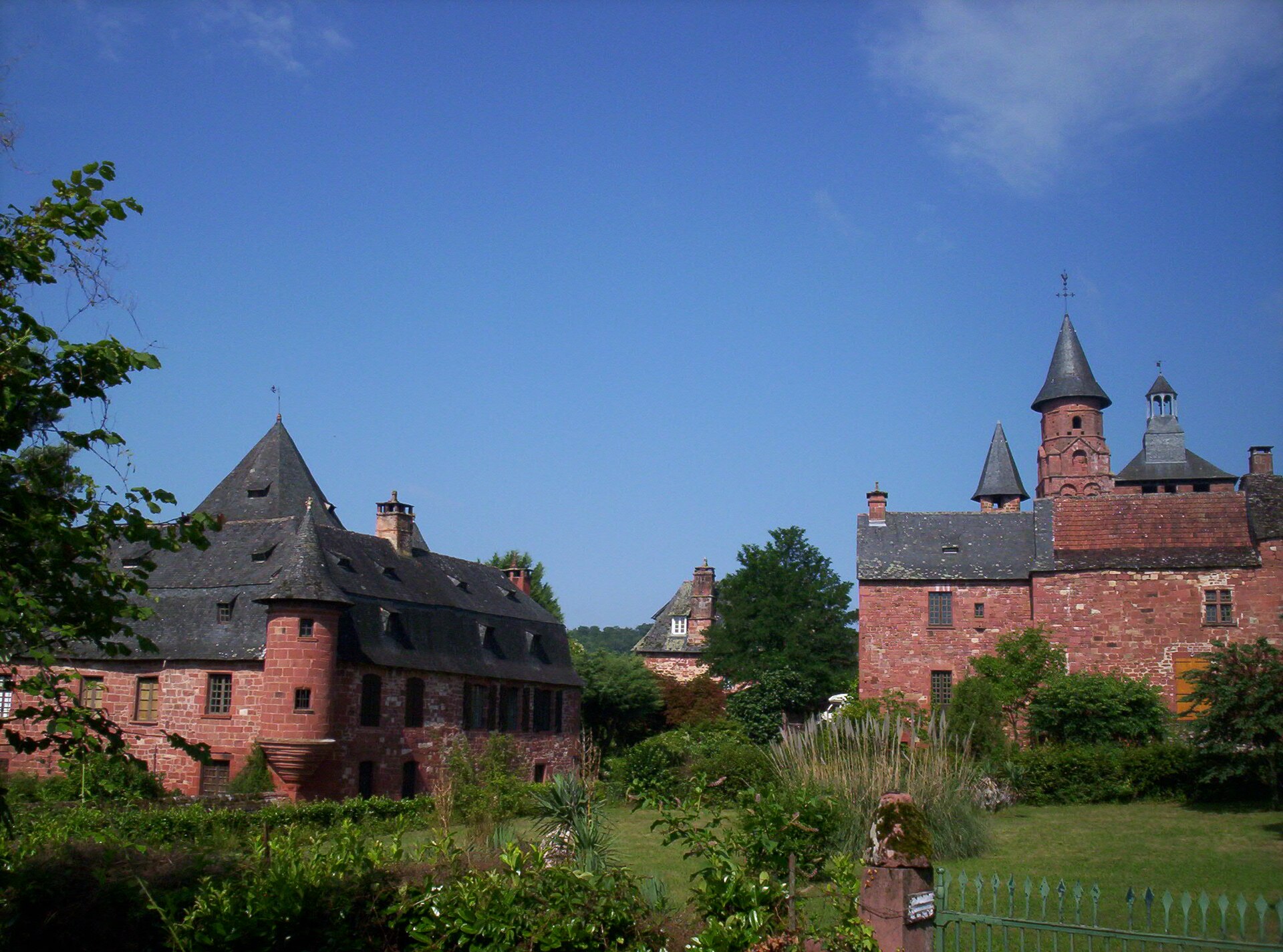
Collonges-la-Rouge is the village that started Les Plus Beaux Villages de France; its mayor founded the association here in 1982. Every building, from the 16th-century manor houses to the church and the covered market, is built from the same deep red sandstone, so the whole village glows in the late afternoon. It is also small enough to see completely in two hours.
Do not miss: the Castel de Vassinhac with its pepper-pot towers, and the walnut cake and foie gras from the shops on the main street. Then drive 15 minutes to Turenne, another Plus Beau Village on a hill of white stone, for the contrast.
Stay: Le Relais de Saint-Jacques, a small hotel in the heart of the village.
Getting there: 25 minutes by car from Brive-la-Gaillarde, which has direct trains from Paris in about 4 hours.
24. Bonifacio, Corsica
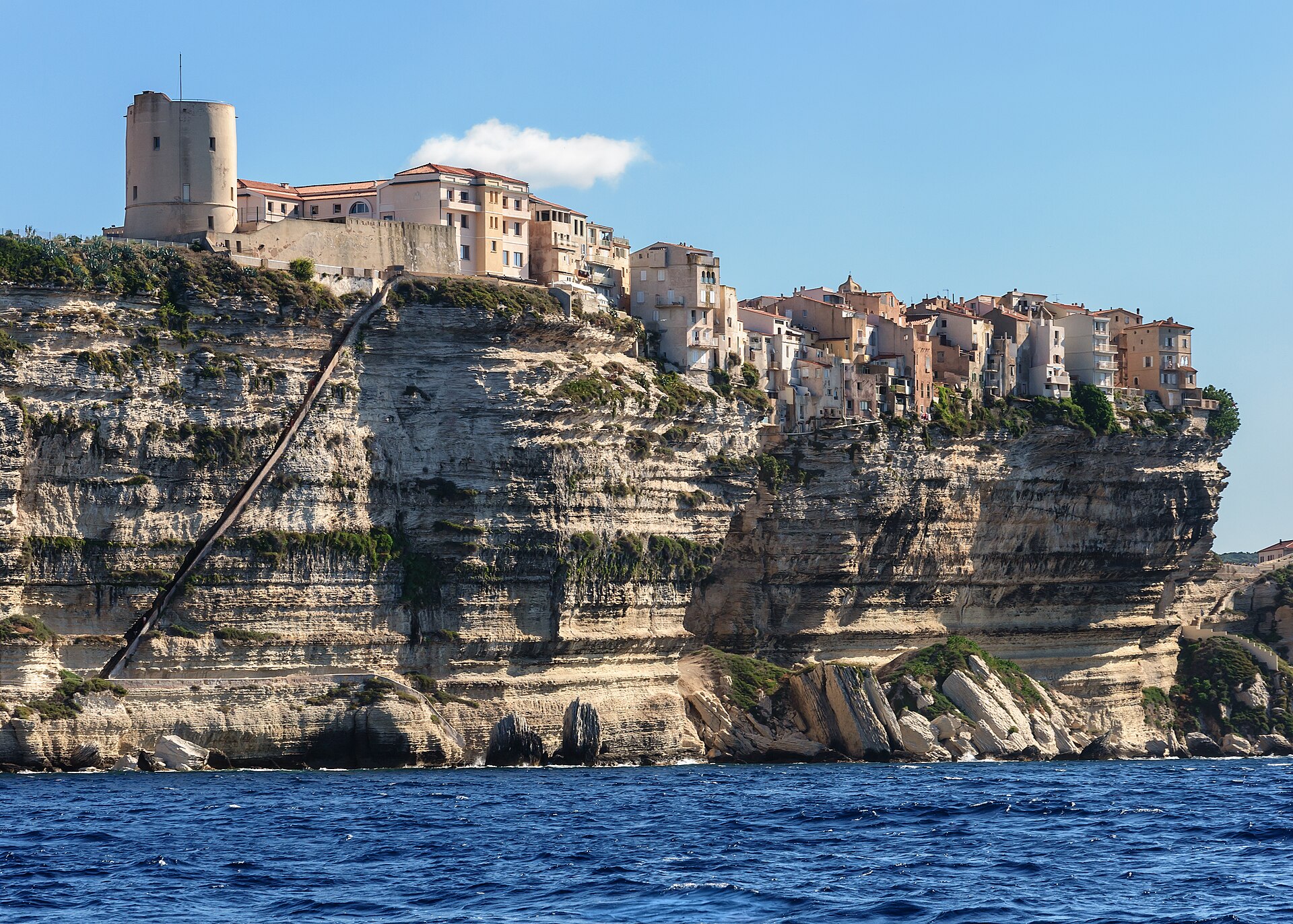
Bonifacio is a fortified town of 3,000 people balanced on top of white limestone cliffs at the southern tip of Corsica, with a marina in a natural fjord below and Sardinia visible across the strait. The old houses on the cliff edge appear to hang over the sea because, after centuries of erosion, some of them do.
Do not miss: a boat trip out of the harbour to see the cliffs and the Grotte du Dragon from the water, and the King of Aragon’s staircase, 187 steps cut diagonally down the cliff face to a spring.
Stay: Hôtel Genovese inside the citadel, or U Capu Biancu on the coast 10 km away if you want a beach and a pool.
Getting there: 30 minutes by car from Figari airport, 2 hours from Ajaccio.
25. Baume-les-Messieurs, Jura
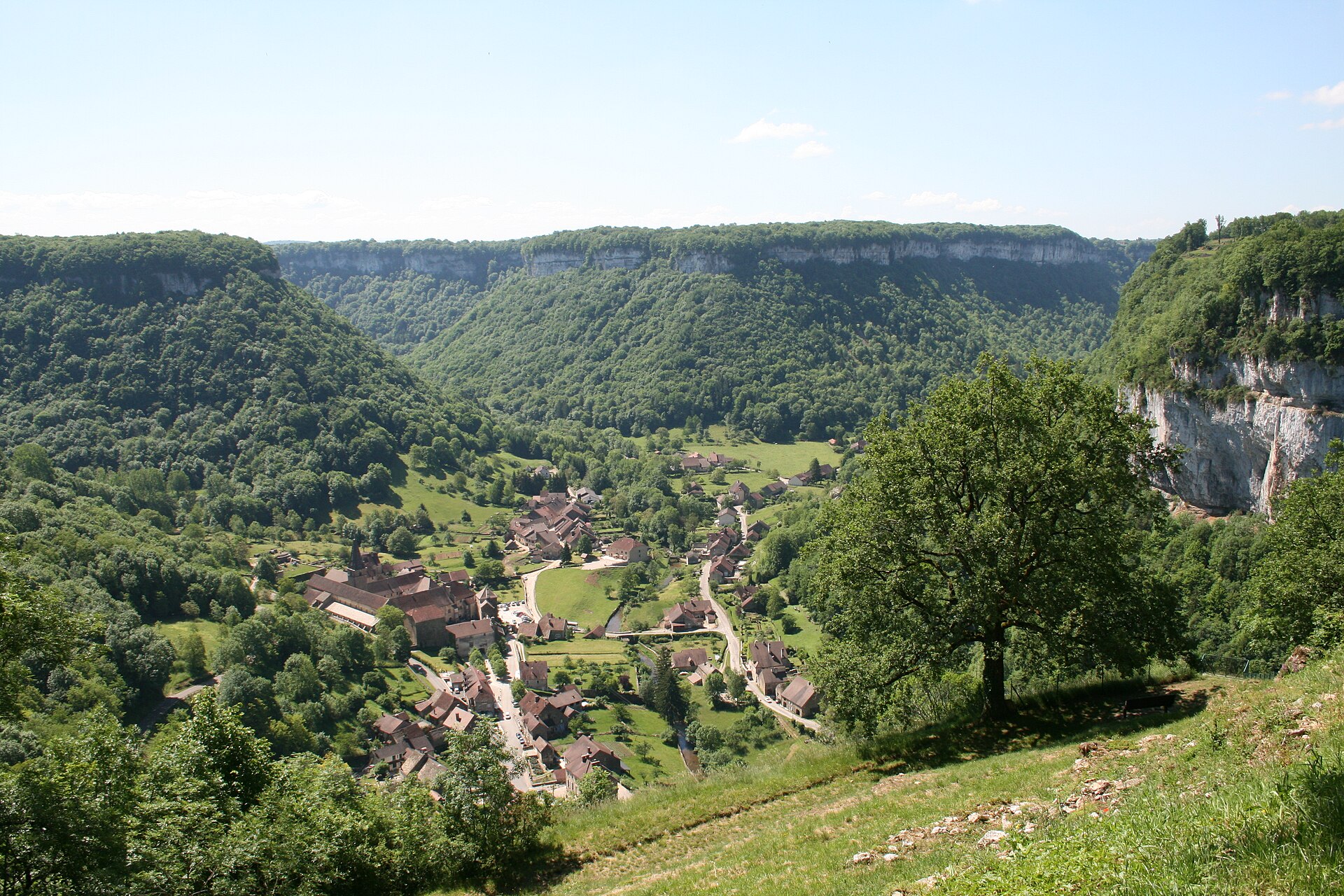
Baume-les-Messieurs sits at the bottom of a reculée, a steep blind valley cut into the Jura limestone, with an 8th-century abbey in the middle and waterfalls at the end. It is the least known village on this list, in one of the least visited parts of France, and it is as beautiful as anything in Provence. You will mostly share it with hikers and the odd Comté cheesemaker.
Do not miss: the Cascades des Tufs, a wide limestone waterfall 15 minutes’ walk from the village, the Grottes de Baume just above it, and the view down into the valley from the belvédère on the road from Crçançon.
Stay: Le Grand Jardin, a chambres d’hôtes in the village, or in Château-Chalon, 15 minutes away, for the vin jaune vineyards.
Getting there: 20 minutes by car from Lons-le-Saunier, 1 hour 30 from Geneva, 2 hours 30 from Lyon.
How to plan a trip around the most beautiful villages in France
You cannot see all 25 in one trip, and you should not try. Pick one region, hire a car and give each village half a day. These three routes cover the best of the list.
| Route | Days | Villages | Base | Fly into |
|---|---|---|---|---|
| Provence and the Riviera | 7 | Gordes, Roussillon, Ménerbes, Lourmarin, Moustiers, Èze, Saint-Paul-de-Vence | Gordes, then Nice | Marseille or Nice |
| Alsace wine route | 3 | Riquewihr, Eguisheim, Kaysersberg | Colmar | Basel or Strasbourg |
| The South-West | 5 | La Roque-Gageac, Beynac, Saint-Cirq-Lapopie, Conques, Collonges-la-Rouge | Sarlat, then Cahors | Toulouse or Bordeaux |
When to go
May, June and September are the months to aim for: warm, green and before or after the August crowds. Lavender in Provence peaks from late June to mid July. Alsace is at its best in October for the harvest and in December for the Christmas markets, when Riquewihr and Eguisheim are as pretty as they will ever be. Avoid the first two weeks of August everywhere; half of France is on holiday and the small villages cannot absorb it.
Getting around
A car is essential for every region except Giverny and Èze, which you can reach by train and bus. Most villages are car-free inside the walls, with a paid car park outside; arrive before 10am or after 4pm in summer and you will find a space. Hire the smallest car you are comfortable in, because the lanes are narrow and the parking spaces narrower.
Budget
Villages are cheaper than cities for everything except hotels, where the best places are small and book out months ahead. Expect to pay €150 to €250 a night for a good village hotel and €400 and up for the palace hotels in Gordes and Èze. Our guide to travel costs in Europe has the full breakdown for France.
Market days
Every village on this list has a weekly market, and it is the best meal you will have. Lourmarin on Friday, Gordes on Tuesday, Saint-Cirq-Lapopie on Wednesday in summer, Riquewihr on Friday. Check the day before you plan your route; the market is the one morning you want to be there.
Frequently asked questions about the most beautiful villages in France
What are the most beautiful villages in France?
Gordes in Provence is the most beautiful village in France by most measures: it is the most photographed, sits on the most dramatic site and has the best hotels. Riquewihr in Alsace and Èze on the Riviera are the strongest challengers, and all three appear in the top five of this list.
What are the Plus Beaux Villages de France?
Les Plus Beaux Villages de France is an independent association founded in 1982 in Collonges-la-Rouge that certifies the most beautiful villages in France. A village must have fewer than 2,000 residents and at least two protected heritage sites to apply, and around 175 villages hold the label at any one time. Twenty of the 25 villages on this list are members.
Which of the most beautiful villages in France is closest to Paris?
Giverny is the closest village on this list to Paris, 75 km west and 45 minutes by train from Saint-Lazare station. Montrésor in the Loire Valley and Vézelay in Burgundy are both about 2 hours 30 by car and make good overnight trips.
Can you visit the most beautiful villages in France without a car?
Only a few. Giverny, Èze, Saint-Paul-de-Vence and Mont-Saint-Michel have reliable train or bus links. For Provence, Alsace, the Dordogne and the south-west, hire a car; the villages are 10 to 30 minutes apart and public transport between them is rare.
When is the best time to visit the most beautiful villages in France?
Late May to June and September are best for weather and crowds. Visit Provence in late June or early July for lavender, Alsace in October or December, and the south-west villages in September when the summer visitors have left.
How many days do you need for the most beautiful villages in France?
Allow half a day per village and three to four villages per region, so a five-day trip covers one region well. A full week in Provence covers all seven of its villages on this list.
Keep exploring France and Europe
If these villages have earned a place on your list, the rest of France is waiting. Our guide to 20 incredible places to visit in France covers the cities and regions between them, and top 10 places in the French countryside goes deeper into Provence, the Dordogne and the Loire. In Paris, start with 30 hidden locations in Paris and, if the Basque cakes and Alsace tarts have had an effect, the best pastry classes in Paris.
Beyond France, the same instinct for small and beautiful places runs through 25 secret small towns in Europe, the fairytale towns of Europe and, for the bigger picture, the 30 most beautiful cities in Europe and the Europe bucket list.

Brooke is a Tasmanian-born writer and professional baker who started World of Wanderlust in 2013 and has since travelled to 86 countries. These days her guides focus on what she knows best: the bakeries, hotels and places worth crossing the world for.
